Carnivores, Herbivores & Omnivores: Diets of Ocean Fish
On this page
You'll find that over 75% of marine fish species exhibit carnivorous feeding behaviors, yet this statistic masks the remarkable dietary diversity that's shaped ocean ecosystems for millions of years. When you examine the anatomical adaptations and feeding strategies across different trophic levels, you're witnessing evolutionary solutions that've allowed fish to exploit virtually every available food source in marine environments. The intricate relationships between these dietary guilds determine ecosystem stability in ways that researchers are only beginning to understand.
Ocean Carnivores: Predators of the Deep

While surface waters teem with plankton and smaller organisms, the ocean's apex predators have evolved sophisticated hunting strategies to dominate marine food webs.
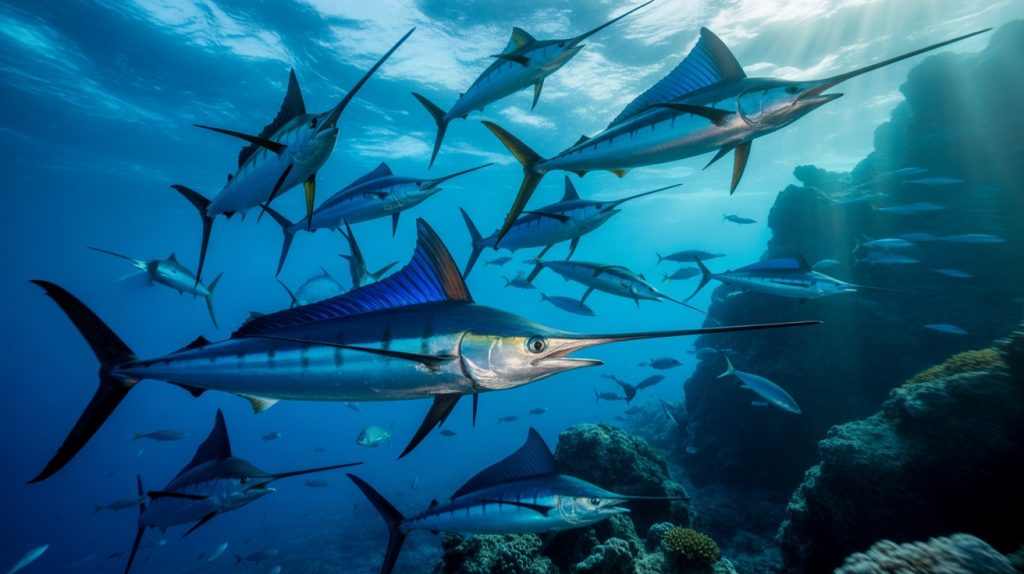
You'll find carnivorous fish employing diverse feeding mechanisms: ambush predators like groupers use explosive speed, while pelagic hunters such as tuna rely on sustained pursuit.
Shark species demonstrate specialized dentition—great whites possess serrated triangular teeth for slicing, whereas tiger sharks feature curved cusps for gripping.
Deep-sea carnivores like anglerfish utilize bioluminescent lures to attract prey in aphotic zones.
These predators maintain trophic balance through selective pressure, preventing herbivore populations from overgrazing marine vegetation and controlling species distribution patterns throughout oceanic ecosystems. Additionally, the decline of top predators can disrupt predator-prey relationships, leading to negative effects on marine biodiversity.
Marine Herbivores: Plant-Eating Fish of the Seas
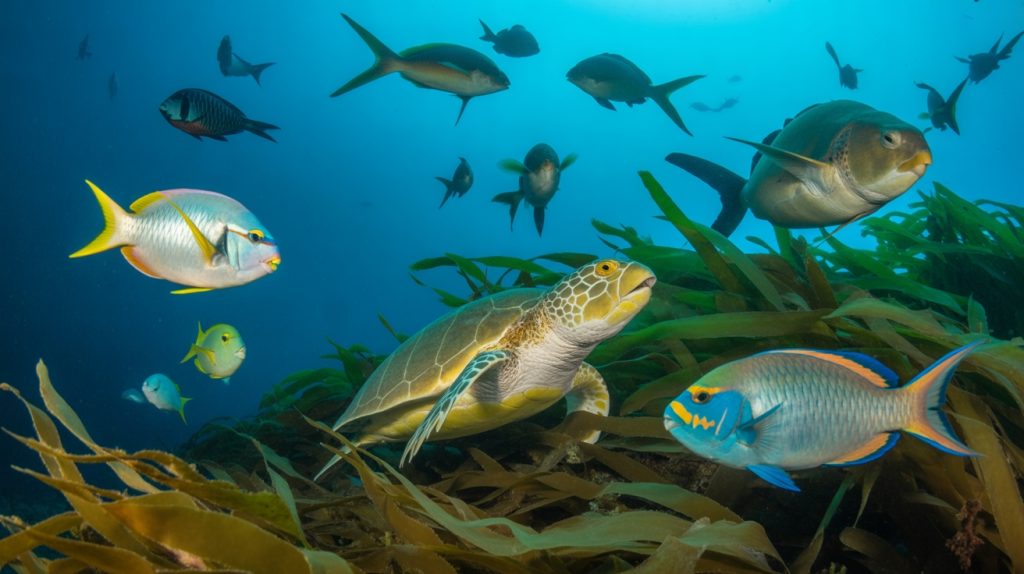
Although carnivorous species dominate public perception of marine predators, herbivorous fish constitute essential components of oceanic ecosystems through their specialized feeding adaptations and ecological roles.
You'll find these plant-eaters possess unique anatomical features including elongated intestinal tracts for cellulose digestion and specialized pharyngeal teeth for algae processing.
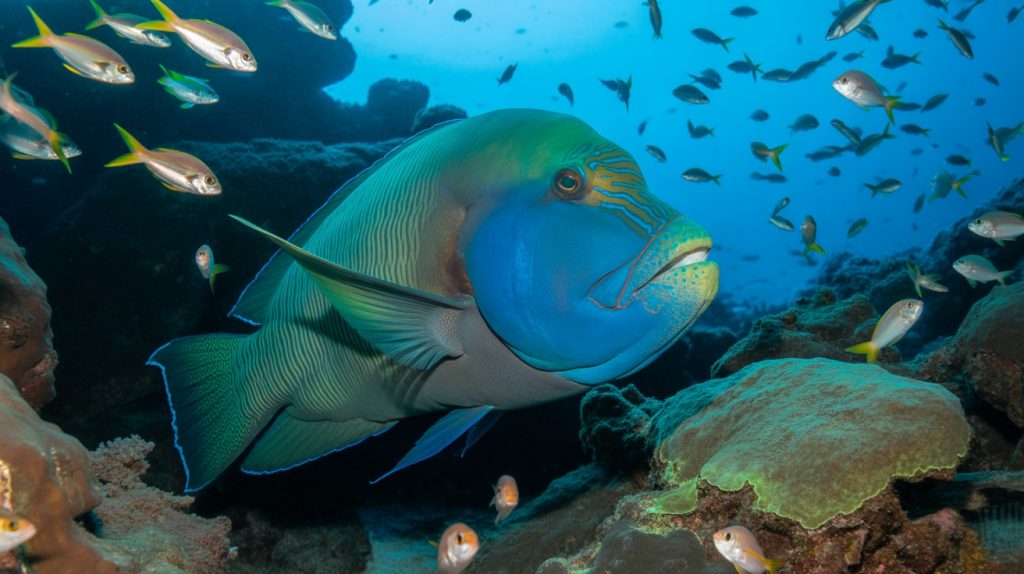
Parrotfish exemplify this group, utilizing beak-like mouths to scrape algae from coral surfaces. Surgeonfish and tangs demonstrate territorial feeding behaviors, maintaining algal gardens through selective grazing.
You'll observe that marine herbivores function as critical ecosystem engineers, preventing algal overgrowth that would otherwise suffocate coral reefs. Their continuous grazing maintains biodiversity balance, supporting healthy reef systems essential for countless marine species' survival and reproduction. Additionally, healthy herbivore populations contribute to coastal protection by aiding in the resilience of coral reefs against environmental stresses.
Omnivorous Ocean Dwellers: Flexible Feeders
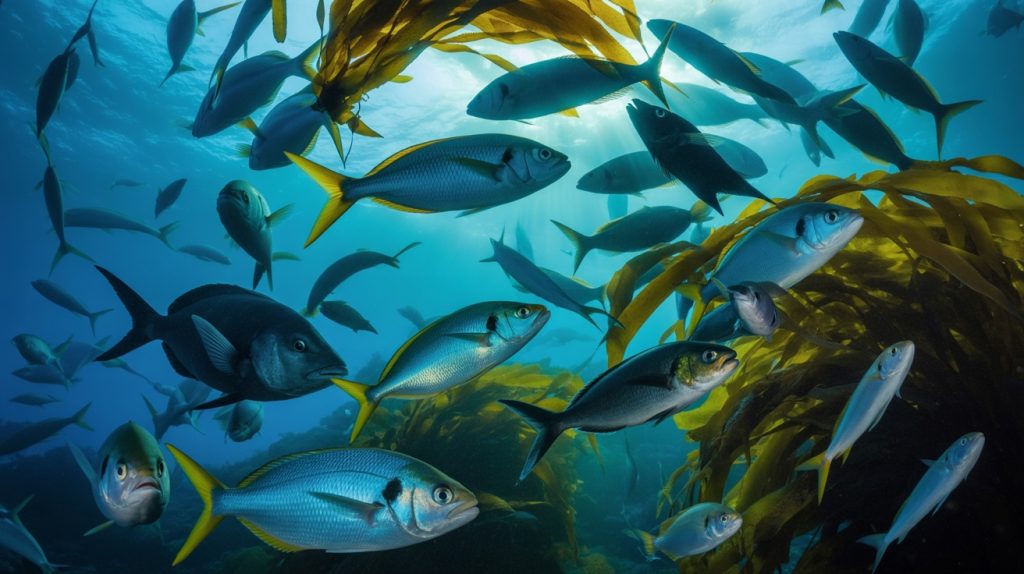
Beyond the specialized feeding strategies of strict herbivores and carnivores, omnivorous fish represent the ocean's most adaptable feeders, employing flexible dietary approaches that shift based on prey availability, seasonal changes, and habitat conditions.
You'll find these versatile species occupy diverse marine ecosystems, from coral reefs to open ocean environments. Their opportunistic feeding behavior maximizes energy acquisition while minimizing foraging costs through dietary plasticity.
Key characteristics of omnivorous ocean fish include:
- Digestive versatility - Possess enzyme systems capable of processing both plant cellulose and animal proteins efficiently.
- Morphological adaptations - Feature intermediate tooth structures and gut lengths between herbivores and carnivores.
- Behavioral flexibility - Switch feeding strategies based on resource abundance and competitive pressure.
- Trophic efficiency - Exploit multiple food webs simultaneously, enhancing survival during resource fluctuations. Additionally, these fish often play a critical role in marine ecosystem balance, contributing to the health and diversity of their habitats.
Specialized Adaptations for Different Diets
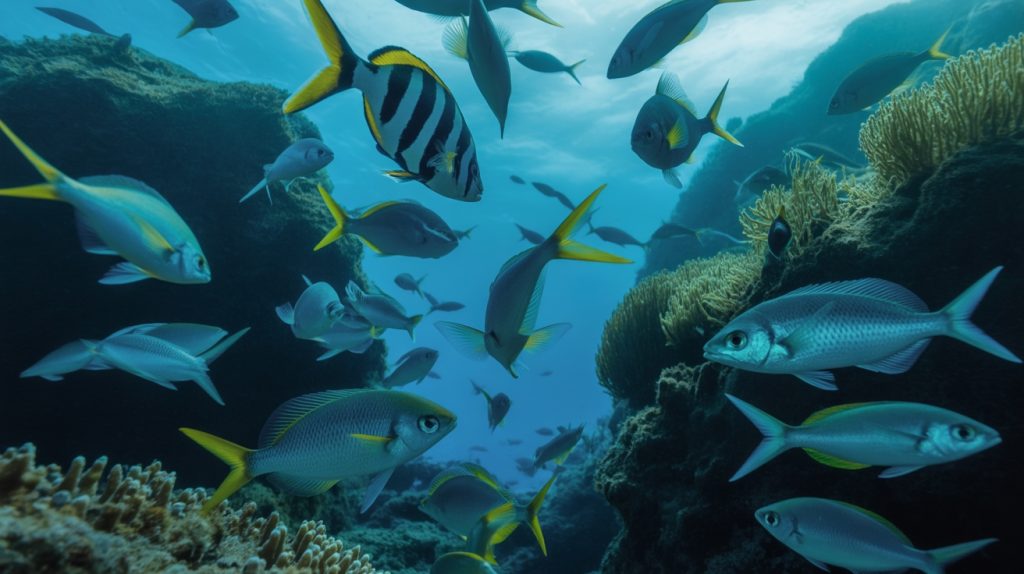
As ocean fish evolved to exploit specific food sources, their anatomical features underwent remarkable modifications that directly correlate with their dietary preferences.
You'll find carnivorous species possess sharp, pointed teeth designed for grasping and tearing prey, while their streamlined bodies enable rapid pursuit. Their digestive tracts remain relatively short since protein digests efficiently.
Herbivorous fish display contrasting adaptations. You'll notice their pharyngeal teeth function like grinding mills, processing tough plant material. Their elongated intestines, often 10-15 times their body length, provide extended surface area for nutrient absorption from cellulose-rich foods.
Filter-feeding specialists develop gill rakers that act as sieves, capturing plankton and small organisms.
You'll observe how baleen whales' modified gill structures exemplify this adaptation, demonstrating nature's precision in matching form to feeding function. Additionally, marine mammals such as keystone species play a vital role in the ocean ecosystem by impacting prey populations and habitat health.
Feeding Behaviors and Hunting Strategies

Countless ocean fish species employ sophisticated hunting strategies that maximize their feeding efficiency while minimizing energy expenditure.
You'll observe these behaviors ranging from solitary ambush tactics to complex cooperative hunting formations.
Primary Feeding Behaviors:
- Ambush predation - Species like groupers utilize cryptic coloration and remain motionless until prey approaches within striking distance.
- Active pursuit - Pelagic predators such as tuna employ burst swimming speeds to chase down fast-moving prey.
- Filter feeding - Planktivorous fish like whale sharks use gill rakers to strain microscopic organisms from water columns.
- Cooperative hunting - Social species including yellowfin tuna coordinate attacks to herd prey into concentrated feeding zones.
These strategies reflect evolutionary adaptations to specific ecological niches and prey availability patterns.
Impact of Diet Types on Marine Ecosystems
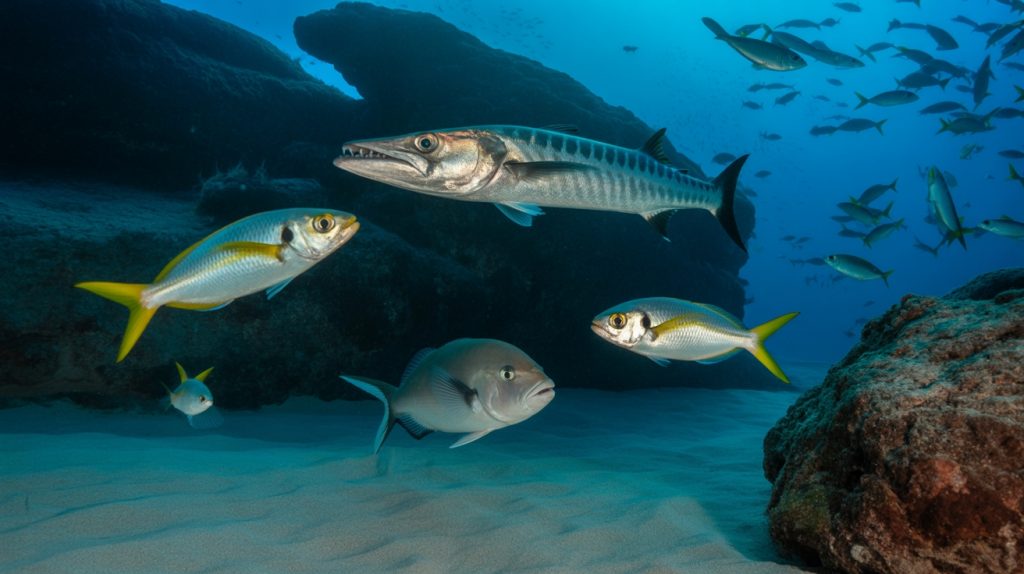
While individual feeding behaviors shape predator-prey relationships, the collective dietary patterns of ocean fish fundamentally structure entire marine ecosystems through complex trophic cascades and energy transfer mechanisms.
When you examine carnivorous apex predators, you'll find they regulate herbivorous fish populations, preventing overgrazing of critical algae and kelp forests. Herbivorous species control primary producer biomass, maintaining phytoplankton diversity essential for oxygen production and carbon sequestration.
Omnivorous fish provide ecosystem stability by occupying multiple trophic levels simultaneously, buffering against population fluctuations. You'll observe that disruptions to any dietary guild create cascading effects: overfishing carnivores leads to herbivore population explosions, while declining herbivore populations cause algal blooms and subsequent hypoxic zones that compromise entire marine food webs. Additionally, the impact of overfishing on ecosystems can lead to significant declines in biodiversity, further destabilizing marine environments.
Conclusion
You might think dietary classifications oversimplify marine ecosystems, but understanding carnivorous, herbivorous, and omnivorous fish provides essential insight into trophic dynamics. Picture a pyramid: apex predators like sharks occupy the top, herbivorous parrotfish maintain the middle tier through algal grazing, while omnivorous species create lateral connections across levels. You're observing interconnected feeding relationships that regulate population dynamics, nutrient cycling, and habitat structure. These dietary guilds aren't isolated categories—they're functional components maintaining oceanic biodiversity and ecosystem resilience.