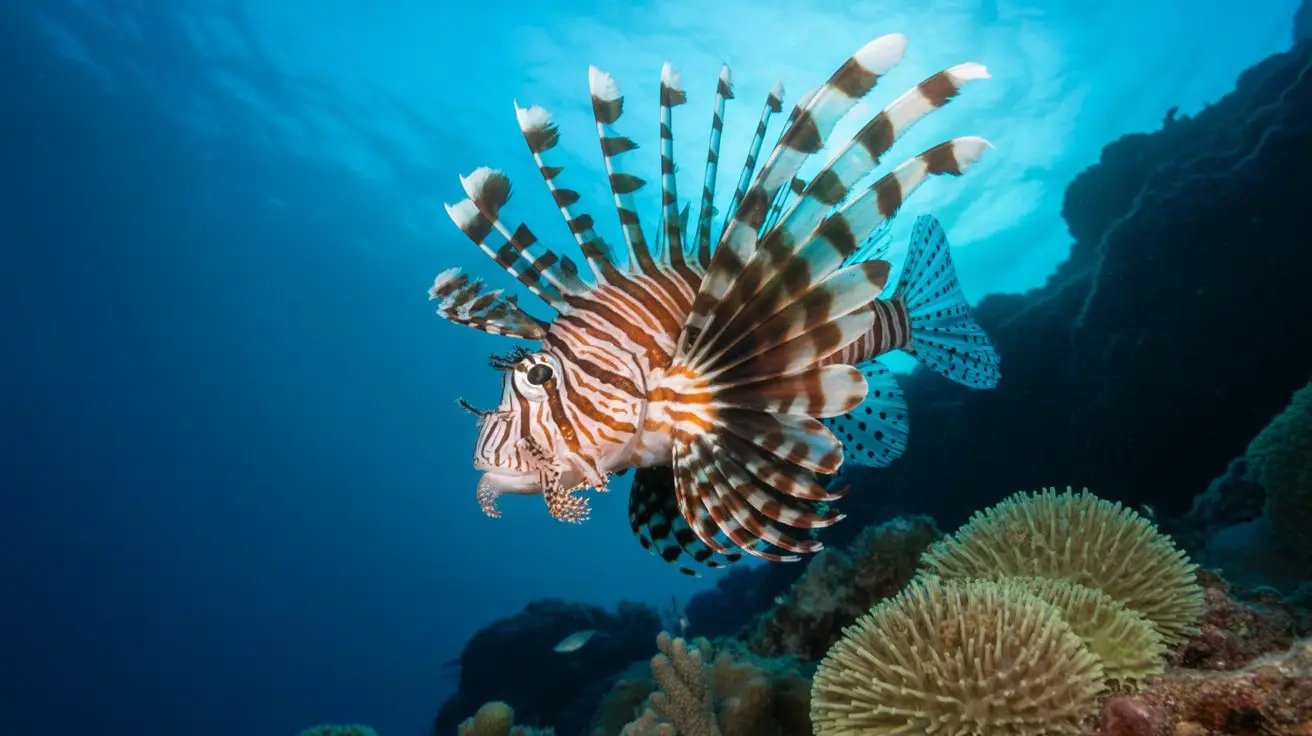
You’d likely find lionfish mesmerizing with their ornate fin displays and vibrant coloration, yet these Indo-Pacific natives have become one of the Atlantic’s most destructive invasive species. Since their introduction in the 1980s, populations have increased exponentially—with densities reaching 390 individuals per hectare in some Caribbean reefs. Their venomous spines provide immunity from local predators, while their voracious appetite devastates native fish communities by up to 79%. The cascading ecological consequences you’re witnessing are only beginning.
Origins and Natural Habitat of Lionfish
Lionfish (Pterois volitans and Pterois miles) evolved in the coral reefs and rocky crevices of the Indo-Pacific region, spanning from the Red Sea and East Africa to French Polynesia and southern Japan.
You’ll find these predators occupying depths from shallow lagoons to 50 meters, where they’ve adapted specialized hunting strategies within complex reef ecosystems.
Their native range encompasses over 93,000 square kilometers of marine habitat, including the Great Barrier Reef, Maldives, and Indonesian archipelago.
You can observe their natural behavior as ambush predators, using venomous spines for defense while maintaining precise territorial boundaries.
Within these established ecosystems, lionfish populations remain controlled by natural predators, parasites, and resource competition that doesn’t exist in invaded waters.
How Lionfish Arrived in Atlantic Waters
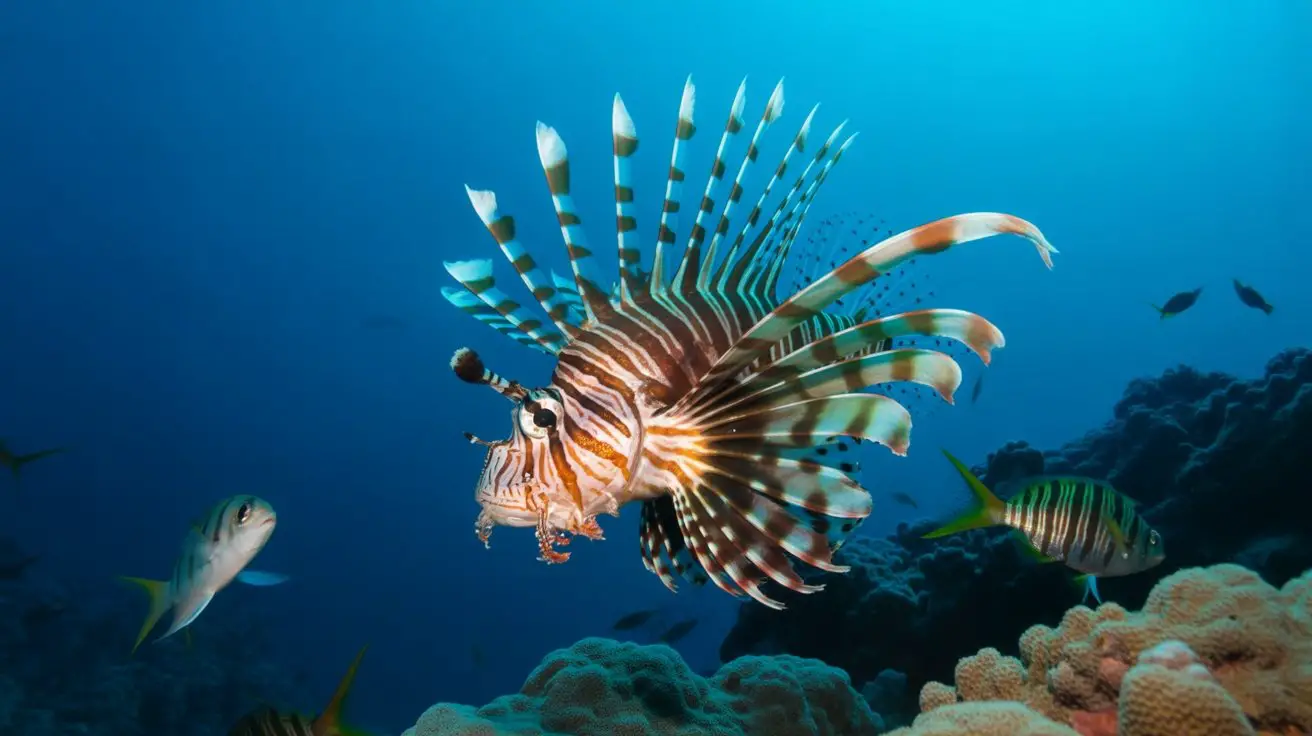
Unlike their controlled populations in Indo-Pacific waters, Atlantic lionfish represent one of the most documented marine invasions in recent history.
You’ll find their introduction stems from multiple pathways that’ve fundamentally altered Western Atlantic ecosystems.
The primary introduction vectors include:
- Aquarium releases – You’re looking at deliberate and accidental releases from home aquariums since the 1980s.
- Hurricane Andrew damage – You can trace significant population establishment to a 1992 aquarium facility breach in Florida.
- Ballast water transport – You’ll observe potential larval transfer through commercial shipping operations.
- Natural larval dispersal – You’re witnessing rapid population expansion via ocean currents carrying planktonic larvae.
These combined factors created self-sustaining populations that’ve colonized coral reefs, seagrass beds, and rocky substrates throughout the Caribbean and southeastern United States.
Physical Characteristics and Venomous Defense System
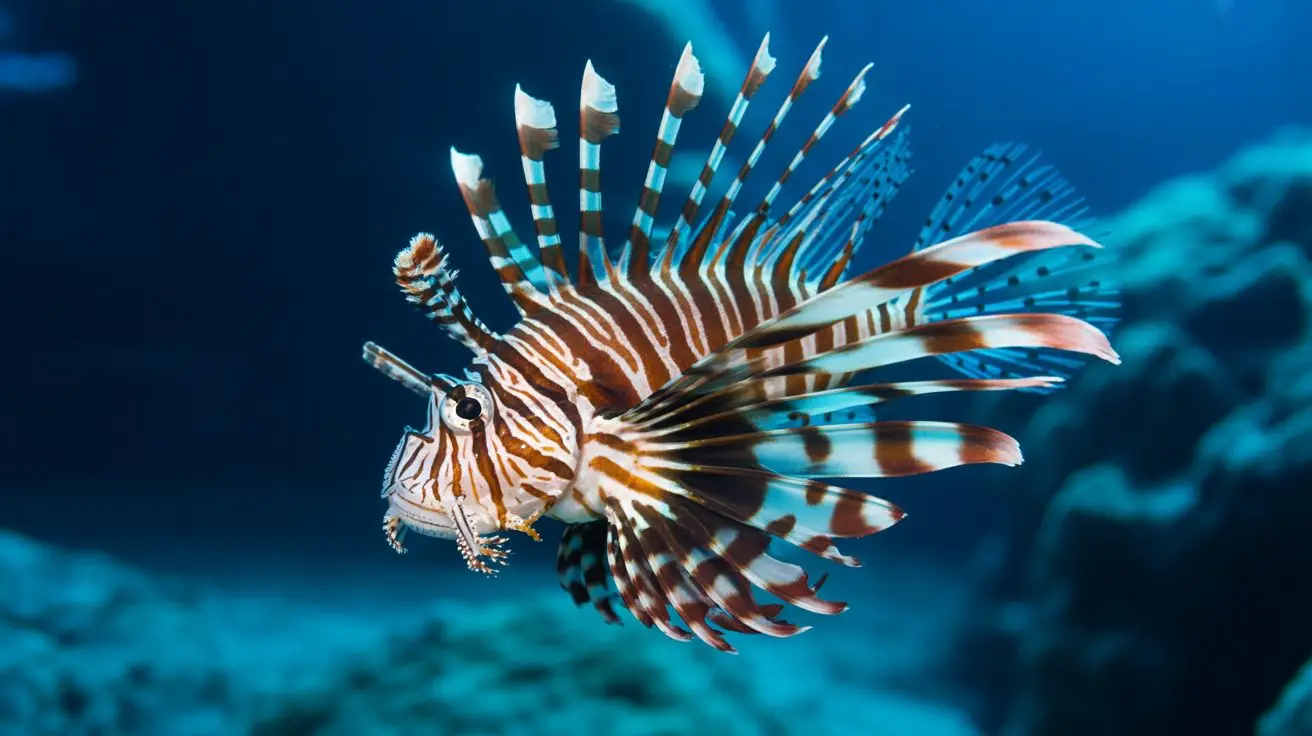
Elaborate fin rays and venomous spines create the lionfish’s most distinctive anatomical features.
You’ll observe eighteen needle-sharp spines containing potent venom that causes severe pain, swelling, and potential respiratory distress in humans. The dorsal fin displays thirteen venomous spines, while anal fins contain three additional toxic spines.
These defensive mechanisms evolved to deter predators in their native Indo-Pacific waters.
You’ll notice their striking coloration—bold red, orange, and white stripes with flowing pectoral fins that span up to twelve inches. This visual warning system, called aposematism, signals danger to potential threats.
Unfortunately, Atlantic predators haven’t evolved to recognize these warning signals, giving lionfish significant survival advantages in invaded ecosystems where they face virtually no natural predation pressure.
Rapid Population Growth and Spread
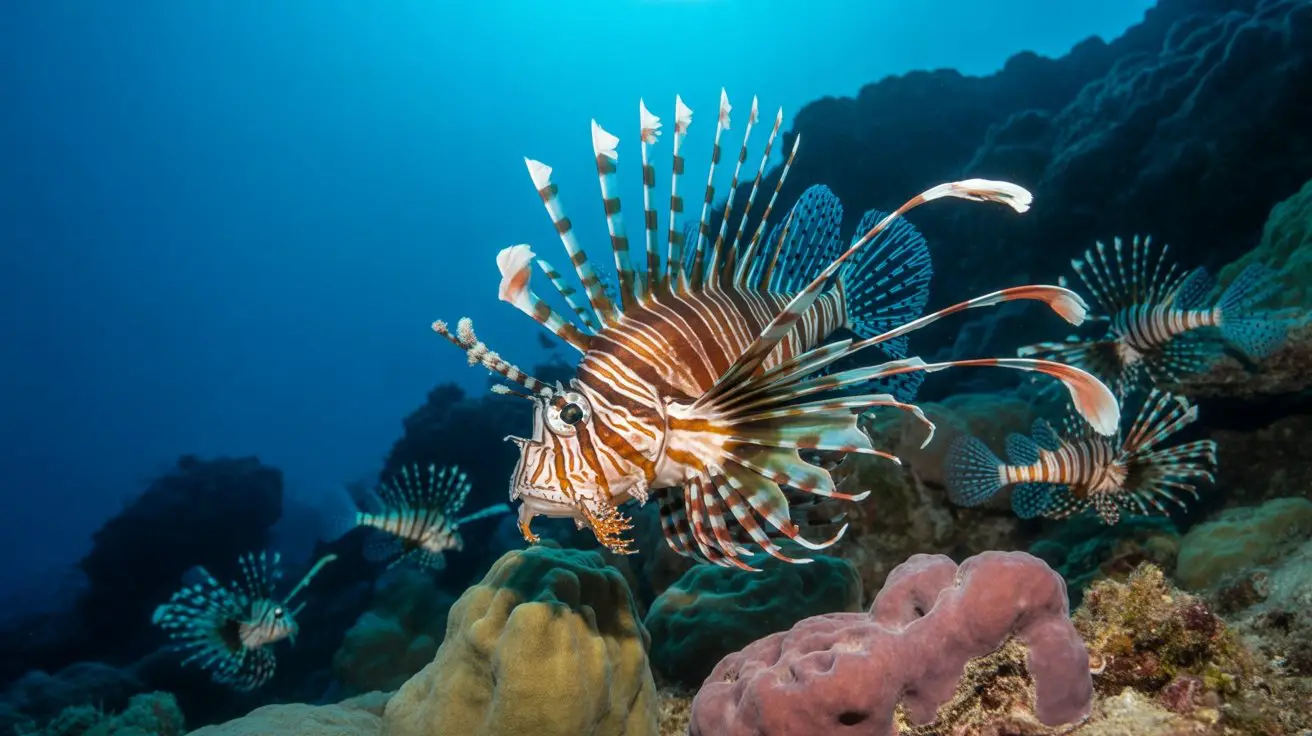
Since their initial detection off Florida’s coast in 1985, you’ll witness exponential population expansion rates that exceed most marine invasive species. This demographic explosion threatens Caribbean and Atlantic ecosystems through unprecedented colonization patterns.
You’ll observe these critical expansion metrics:
- Reproductive capacity: Females spawn 15,000-30,000 eggs every four days during breeding season.
- Geographic spread: Populations now span from North Carolina to Venezuela, covering 7.3 million square kilometers.
- Density increases: Some reefs report 1,000+ individuals per hectare within established populations.
- Establishment success: 95% survival rates in new territories due to lack of natural predators.
You’re witnessing biomass doubling every 18 months in ideal conditions.
Their generalist feeding behavior and tolerance for varying salinity levels accelerate this invasion, fundamentally altering predator-prey dynamics across affected marine ecosystems.
Environmental Impact on Native Marine Life
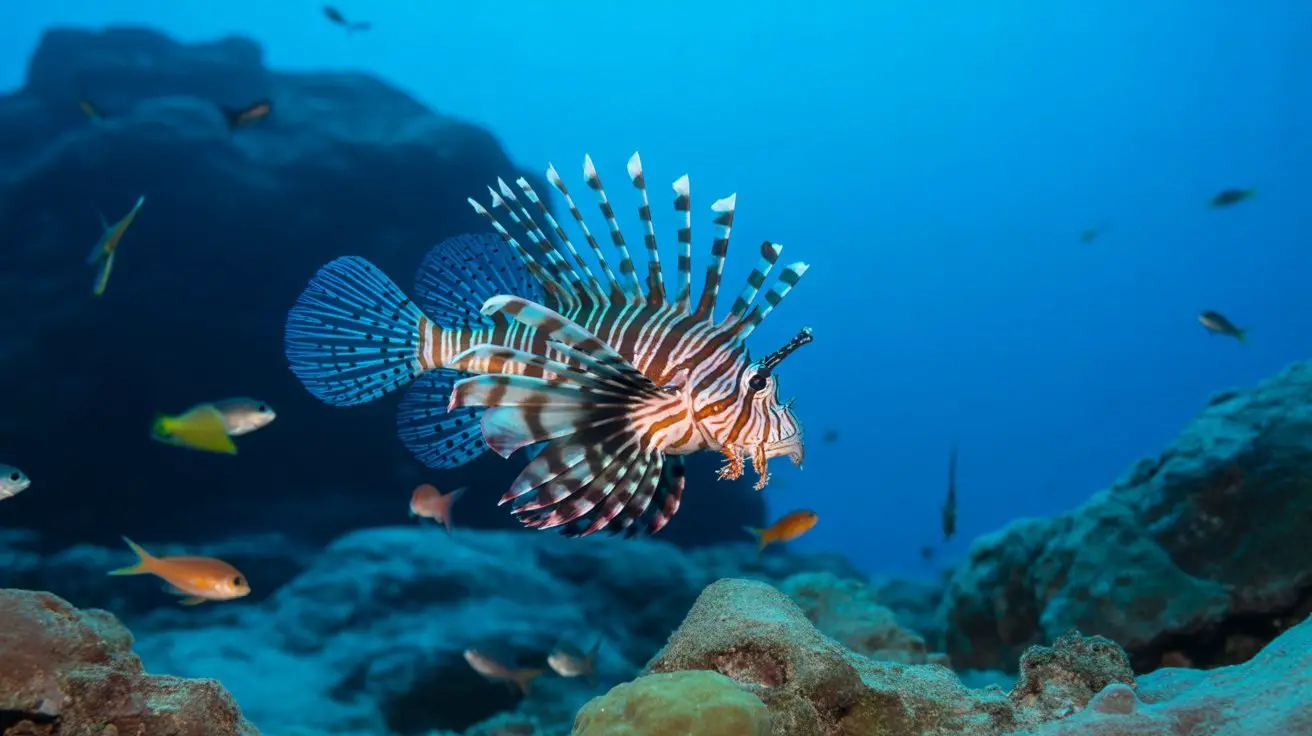
When lionfish establish themselves in a new reef system, you’ll observe immediate cascading effects throughout the food web that devastate native fish populations.
You’re witnessing predation rates up to 79% on juvenile reef fish, with lionfish consuming over 50 species including parrotfish, wrasses, and gobies critical for coral health.
You’ll notice decreased herbivory as parrotfish numbers plummet, leading to algal overgrowth that smothers coral polyps.
The biodiversity collapse you’re seeing stems from lionfish’s voracious appetite—they’ll reduce native fish biomass by 65% within two years.
You’re observing trophic cascades where apex predators lose prey sources, compromising entire ecosystem stability and resilience against climate stressors. Moreover, the introduction of invasive species like lionfish exacerbates the decline in biodiversity, making it crucial to implement effective conservation strategies.
Economic Effects on Fishing and Tourism Industries
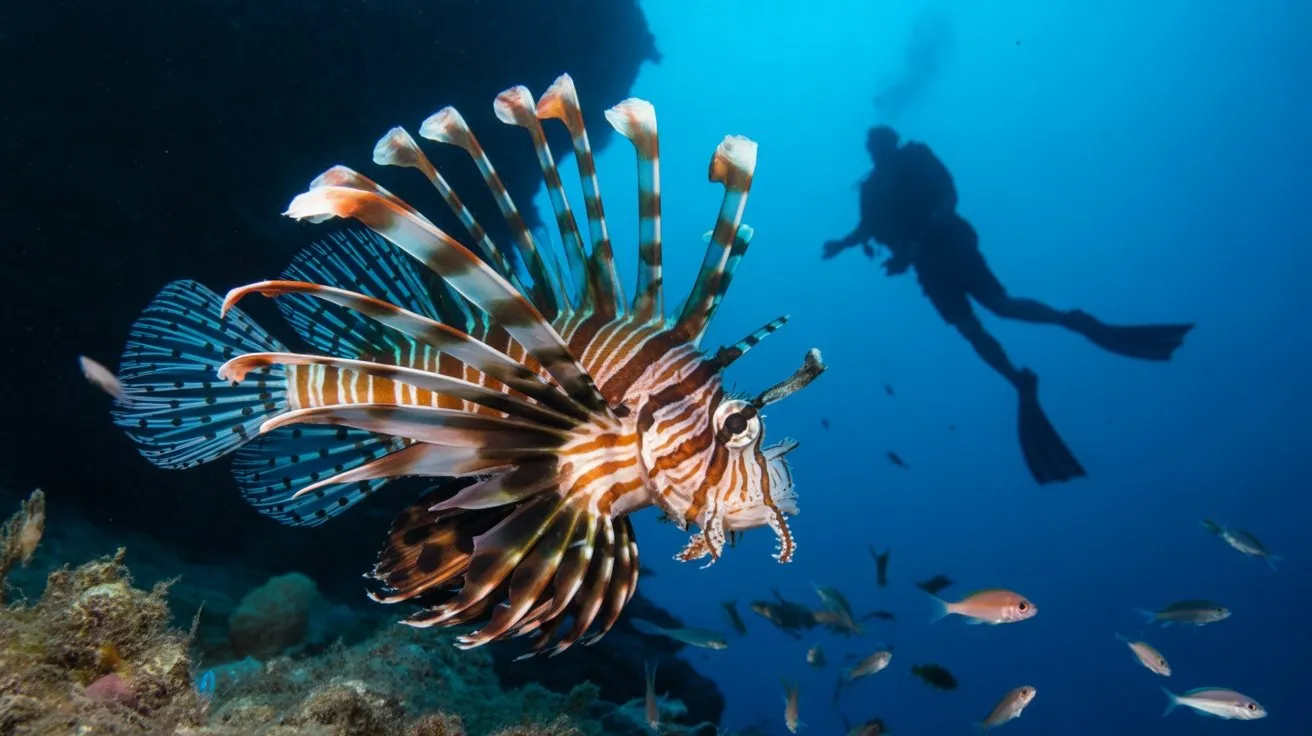
As lionfish populations explode across invaded waters, you’re seeing commercial fisheries suffer significant economic losses through depleted target species and damaged gear. The cascading effects ripple through coastal communities dependent on marine resources.
Economic impacts manifest across multiple sectors:
- Commercial fishing revenue drops 15-30% as native fish stocks collapse in heavily invaded reef systems.
- Tourism operators report decreased dive satisfaction when coral ecosystems show reduced biodiversity and structural complexity.
- Seafood processing facilities face supply shortages of traditional species like grouper and snapper.
- Coastal property values decline in areas experiencing severe reef degradation and reduced fishery productivity.
You’ll find restoration costs exceeding $2.3 billion annually across the Caribbean and Gulf of Mexico regions, while management programs struggle with inadequate funding for thorough lionfish removal efforts. Furthermore, the economic ramifications of overfishing extend beyond local communities, impacting global seafood prices and leading to long-term revenue losses from depleted fish stocks.
Current Control and Management Strategies
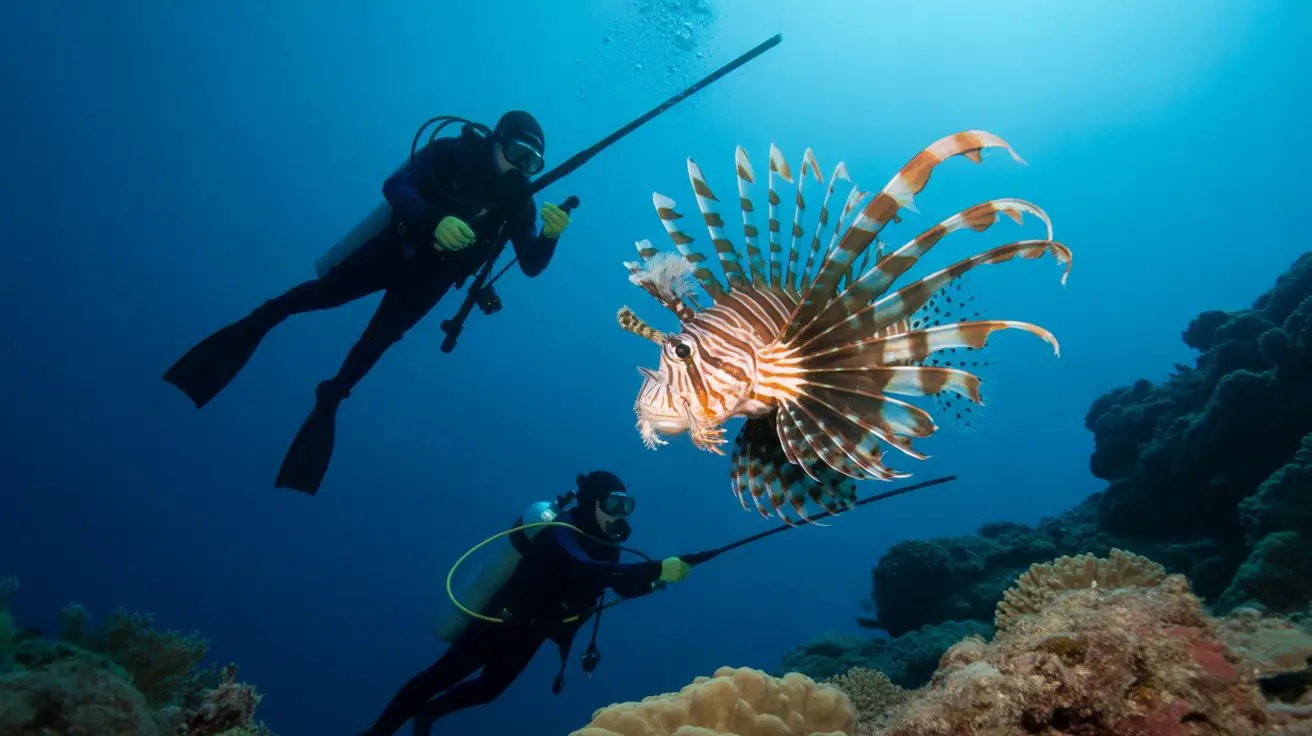
Although traditional fisheries management relies on quotas and seasonal restrictions, lionfish control requires fundamentally different approaches due to their lack of natural predators and rapid reproduction rates. You’ll find that current strategies focus on direct removal rather than population regulation.
| Control Method | Effectiveness Rate |
|---|---|
| Spearfishing | 85-95% local reduction |
| Trap deployment | 40-60% capture success |
| Tournament harvesting | 70-80% participation impact |
| Commercial fishing incentives | 65-75% market integration |
| Ecological restoration | 30-50% long-term recovery |
You’re seeing multi-stakeholder approaches combining recreational divers, commercial fishers, and research institutions. Targeted removal programs demonstrate measurable biomass reductions within specific reef systems. However, you’ll notice that sustained effort’s required since larval recruitment from adjacent areas rapidly replenishes local populations. Data indicates removal frequencies must exceed reproduction rates to achieve ecosystem-level impacts. Furthermore, understanding the roles of ocean predators is vital for effective management strategies that promote ecological balance.
Prevention Measures for Future Invasions
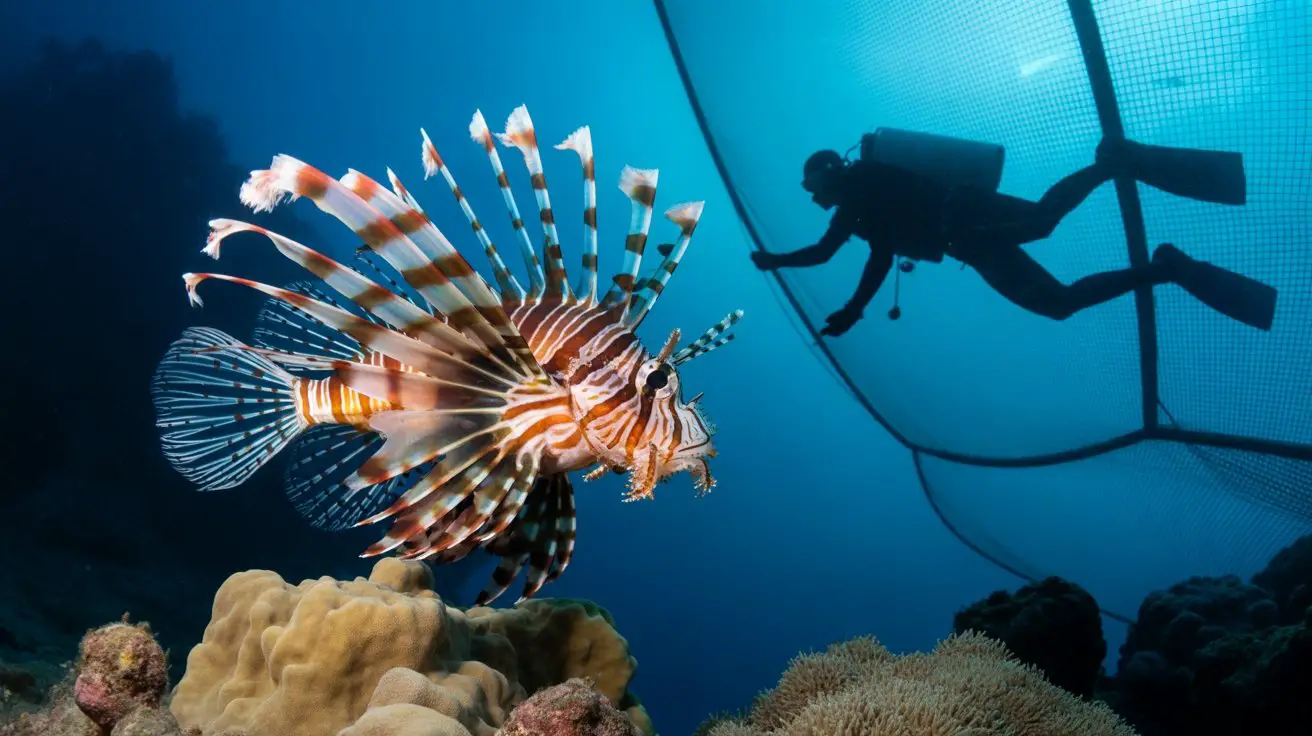
While removal efforts address existing populations, preventing future introductions represents the most cost-effective approach to marine invasion management.
You’ll find that proactive measures cost notably less than reactive control programs, which can exceed $2 million annually per affected region.
Prevention strategies you should implement include:
- Aquarium trade regulations – Establish mandatory permitting systems and import restrictions on high-risk species.
- Ballast water management – Enforce treatment protocols that eliminate larvae and juveniles during vessel transit.
- Public education campaigns – Target aquarium owners with responsible disposal programs and alternative rehoming networks.
- Early detection monitoring – Deploy environmental DNA sampling and citizen science reporting networks in vulnerable ecosystems.
These integrated approaches reduce colonization probability by 85% when properly implemented across maritime corridors. Additionally, engaging in sustainable practices can further bolster efforts to protect marine ecosystems from invasive species.
Conclusion
You’re witnessing an unprecedented marine invasion where a single female lionfish can release up to 2 million eggs annually. You can’t ignore this staggering reproductive capacity that’s fundamentally altering Atlantic reef ecosystems. You’re observing predation rates that reduce native juvenile fish populations by 79% within five weeks of colonization. You must recognize that without sustained intervention protocols, you’re facing irreversible trophic cascades and biodiversity collapse across critical marine habitats throughout the Western Atlantic basin.