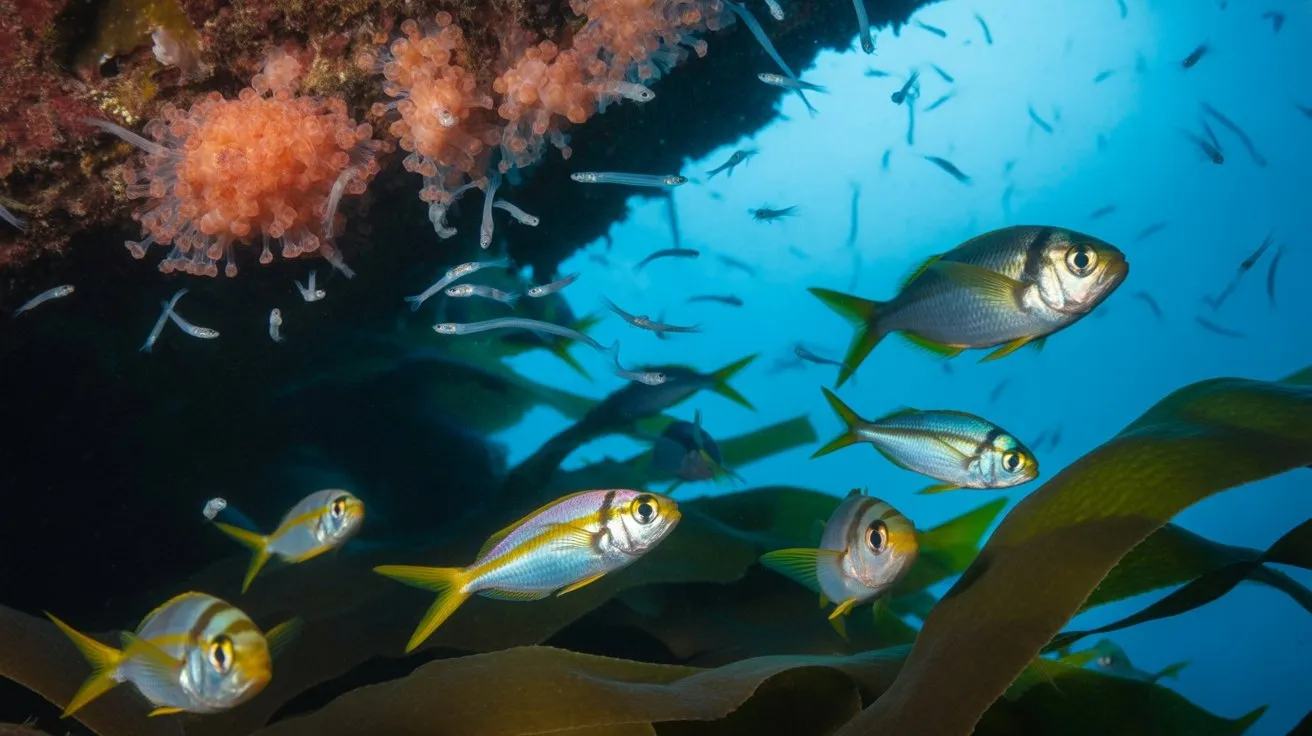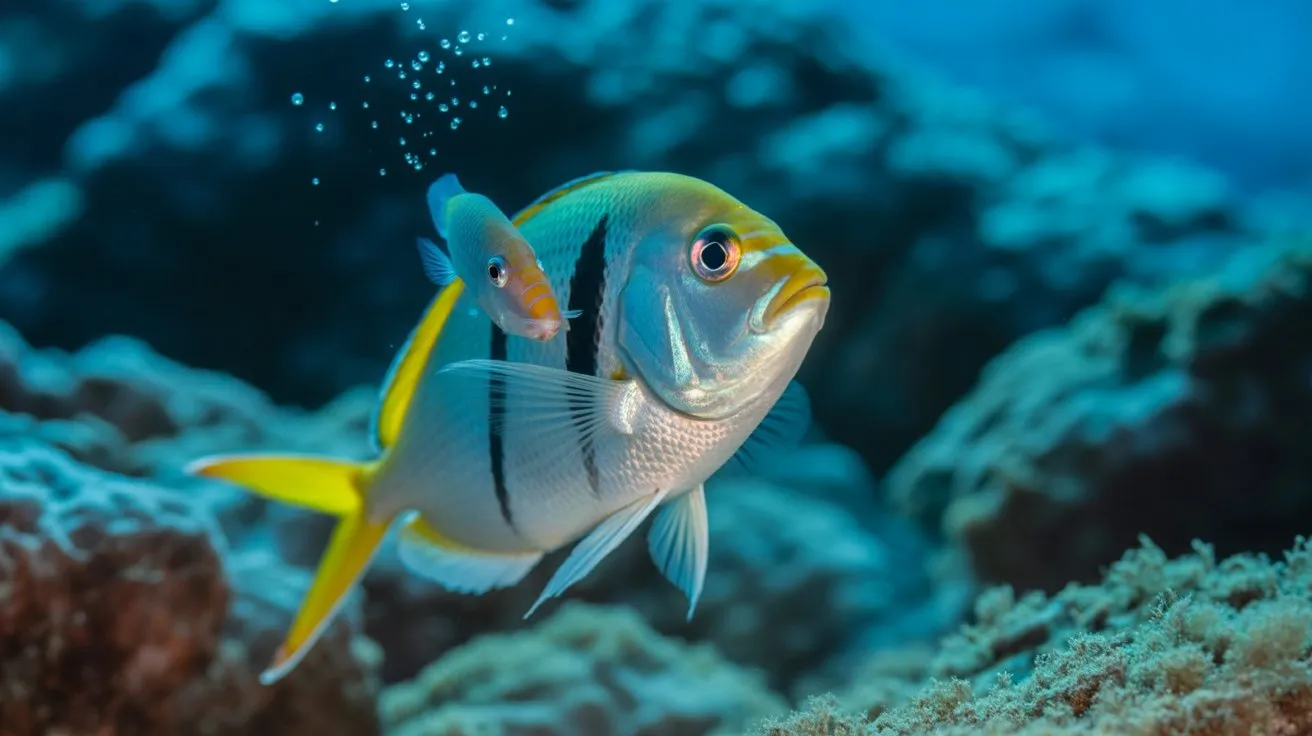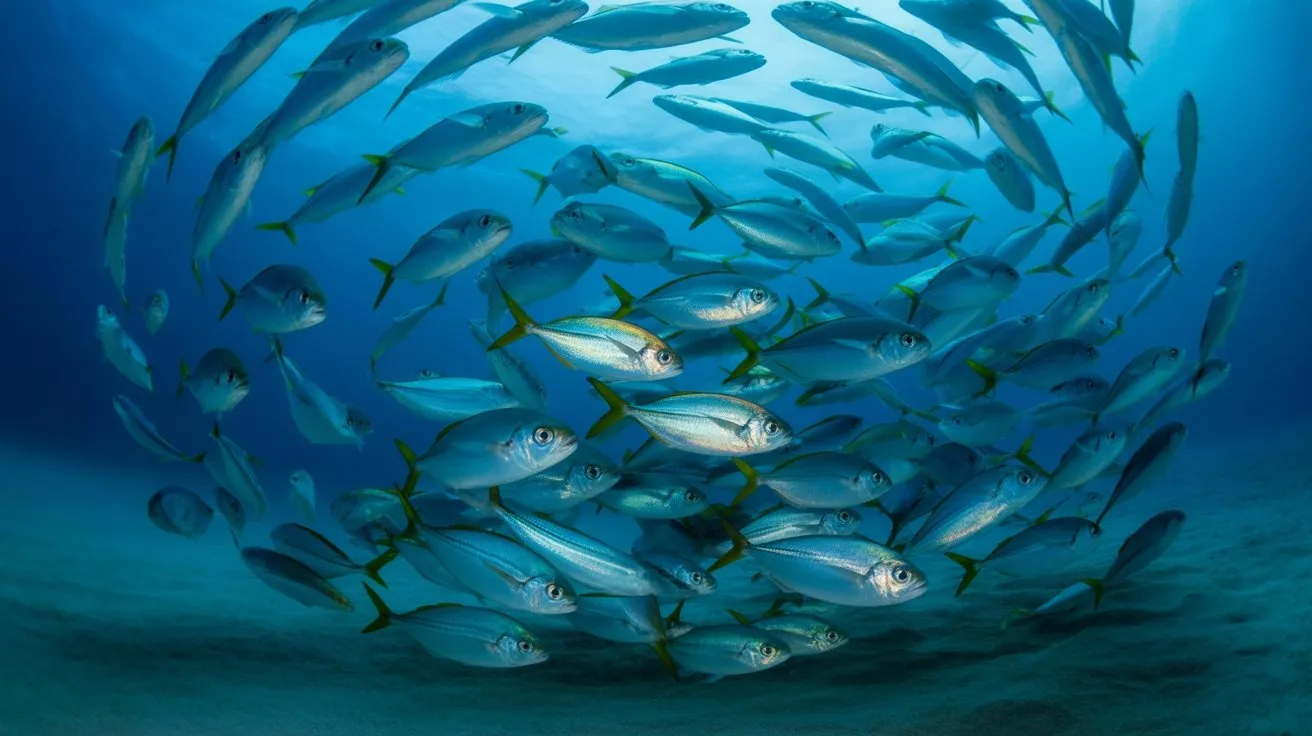
You’ve likely never considered that fish schools operate like underwater supercomputers, with individual members processing sensory data milliseconds faster than your reflexes can respond. Each fish maintains precise positioning using their lateral line system—a sophisticated pressure-detection network that registers water movements from dozens of neighbors simultaneously. This biological technology enables split-second collective decisions that determine survival in predator-rich environments, but the mechanisms driving these lightning-fast group responses reveal something far more complex than simple follow-the-leader behavior.
The Science Behind Fish Schooling: Three Fundamental Rules
When researchers began studying fish schooling behavior in the 1980s, they discovered that complex group movements emerge from three simple behavioral rules that individual fish follow instinctively.
You’ll observe that fish maintain separation by avoiding crowding their neighbors within close proximity. They demonstrate alignment by steering toward the average heading of nearby schoolmates, creating synchronized directional movement.
Finally, they exhibit cohesion by moving toward the average position of neighboring fish, preventing group fragmentation.
These rules operate simultaneously through each fish’s lateral line system, which detects pressure changes and water movements.
You can witness how these simple interactions produce emergent behaviors like predator evasion waves, feeding coordination, and efficient long-distance migration patterns across entire schools containing thousands of individuals.
Evolutionary Advantages of Group Swimming
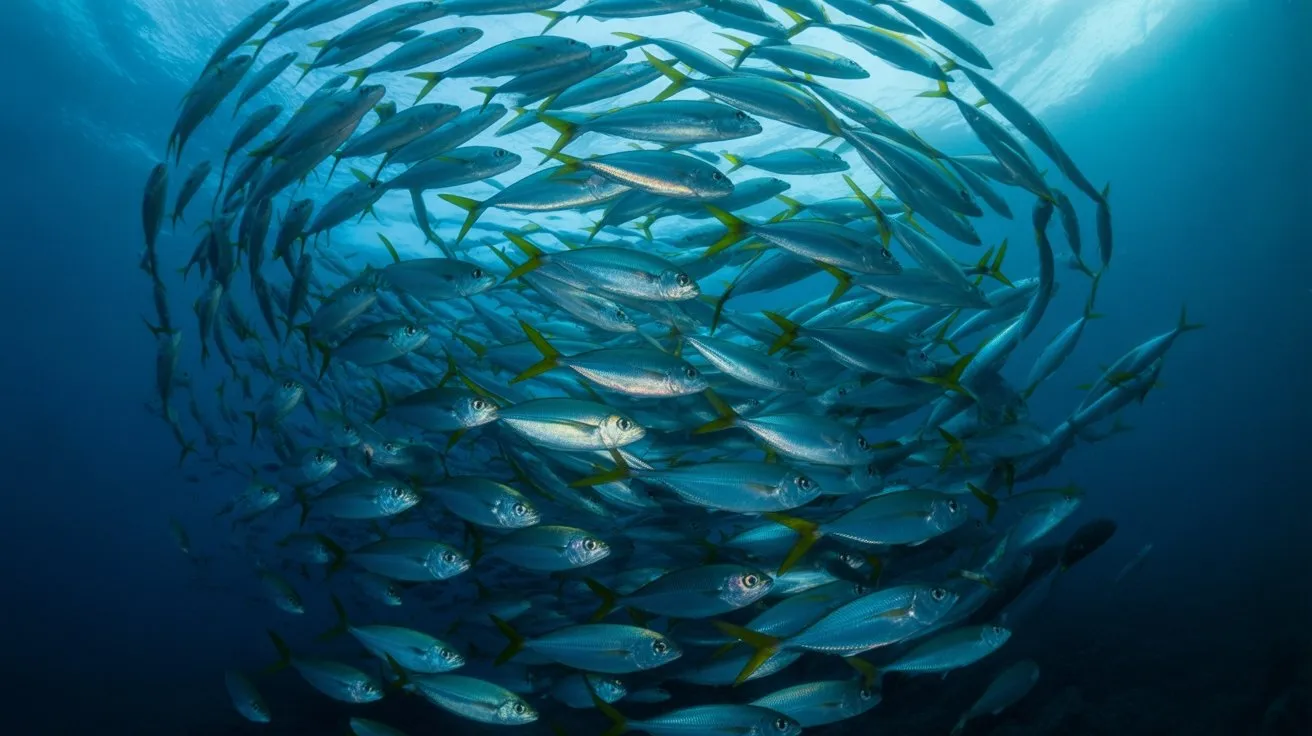
Because schooling behavior has persisted across millions of years of evolution, scientists have identified several key survival advantages that explain why group swimming dominates oceanic ecosystems.
You’ll find these adaptations enhance both individual and collective fitness through multiple mechanisms.
Research demonstrates that schooling provides quantifiable benefits:
- Predator dilution effect: You’re statistically less likely to be targeted when surrounded by hundreds of conspecifics.
- Enhanced foraging efficiency: Groups locate food patches 40% faster than solitary individuals through collective sensing.
- Hydrodynamic advantages: Swimming in formation reduces energy expenditure by up to 20% through vortex utilization.
- Improved reproductive success: Spawning aggregations increase fertilization rates and genetic diversity.
- Information transfer: You’ll benefit from collective navigation and environmental assessment capabilities.
Additionally, marine mammals are known to influence schooling behavior in fish by altering predator dynamics in their habitats.
These evolutionary pressures have shaped ideal schooling strategies across diverse marine taxa.
Communication Methods Within Fish Schools
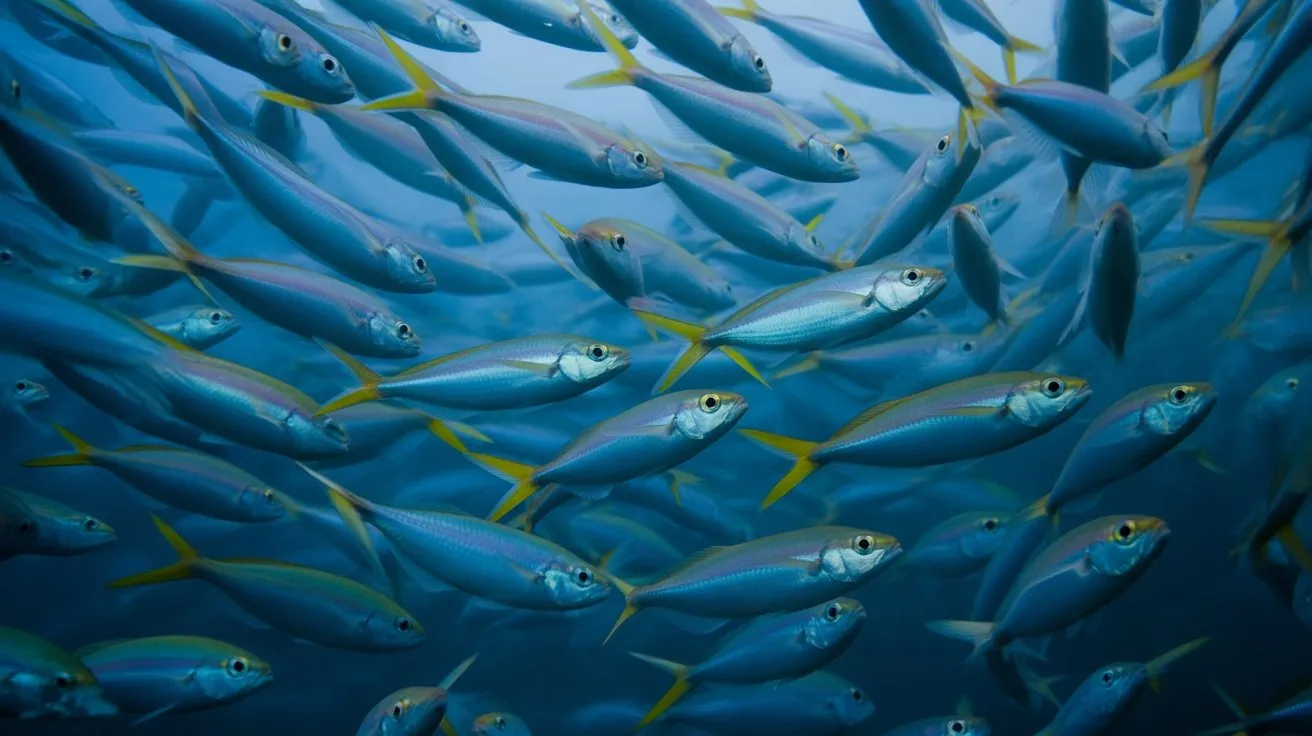
The sophisticated coordination observed in fish schools requires complex communication networks that operate through multiple sensory channels simultaneously.
You’ll find that lateral line systems detect water movements and pressure changes from neighboring fish, enabling precise spacing maintenance. Visual cues provide directional information, with fish responding to body positioning and movement patterns of adjacent schoolmates.
Chemical signals through pheromone release communicate stress levels and predator warnings throughout the group. Acoustic communication occurs via swim bladder vibrations and fin movements, transmitting behavioral cues across distances.
These sensory modalities work together, creating redundant information pathways that guarantee rapid response times. Research demonstrates that fish integrate multiple signals within milliseconds, achieving the remarkable synchronization you observe in nature’s most coordinated group behaviors.
Predator Evasion Strategies Through Collective Movement
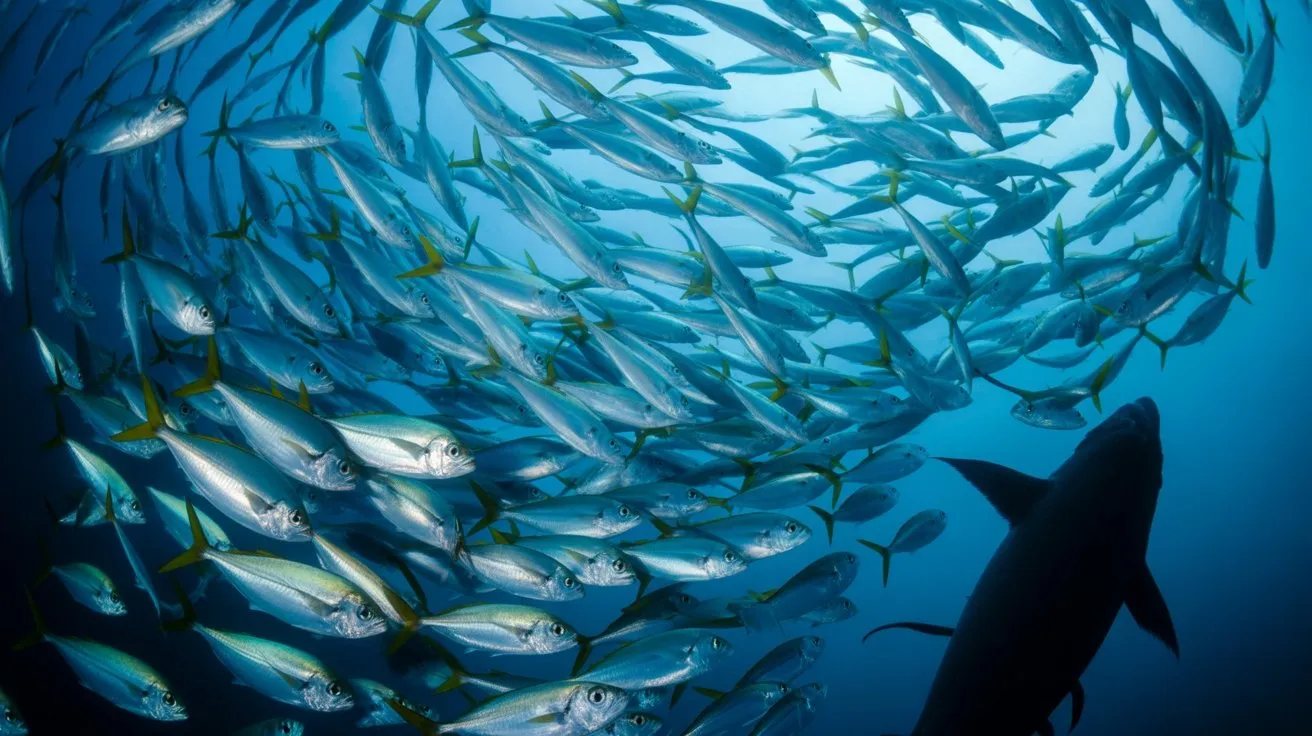
As predators approach, fish schools execute sophisticated evasion maneuvers that dramatically increase individual survival rates compared to solitary escape attempts.
You’ll observe that collective movement patterns create a dynamic defense system where coordinated responses outperform individual reactions.
Schools employ several key evasion strategies:
- Bait ball formation – Fish compress into dense, spherical clusters that confuse predators and reduce capture efficiency.
- Split-and-merge tactics – Schools divide into multiple groups, forcing predators to choose targets while maintaining group cohesion.
- Wave propagation – Escape signals travel through schools at speeds exceeding individual swimming velocity.
- Geometric positioning – Fish maintain ideal spacing that maximizes early warning detection.
- Coordinated burst swimming – Synchronized acceleration patterns create turbulent water that disrupts predator navigation.
These mechanisms demonstrate how collective intelligence enhances survival through emergent group behaviors.
Energy Conservation Benefits of Schooling
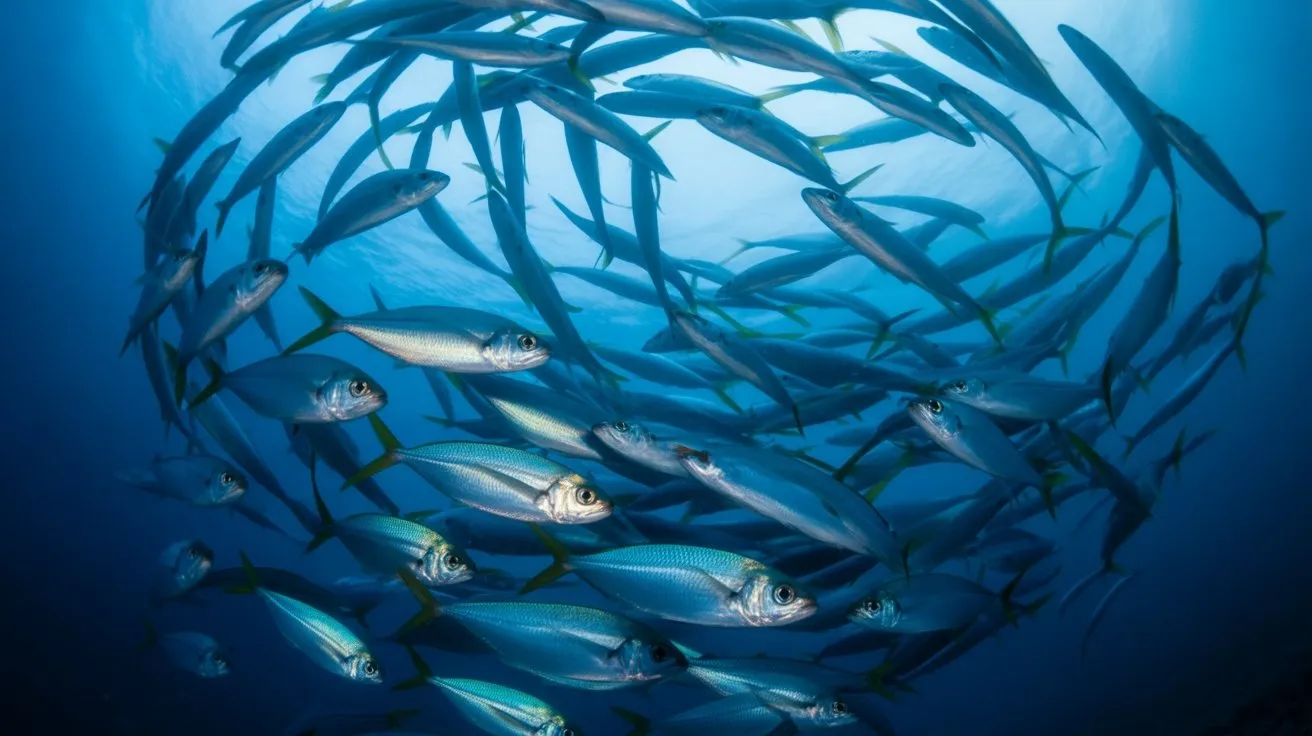
While predator evasion provides immediate survival advantages, schooling fish also gain significant metabolic benefits through hydrodynamic cooperation that reduces individual energy expenditure by up to 40% during sustained swimming. When you observe schooling fish, you’re witnessing sophisticated fluid dynamics where trailing individuals exploit wake vortices generated by leading fish, similar to cyclists drafting in a peloton.
| Swimming Position | Energy Savings | Mechanism | Ideal Distance |
|---|---|---|---|
| Lead Position | 0% | Creates vortices | N/A |
| Mid-school | 20-30% | Vortex exploitation | 0.3-0.7 body lengths |
| Trailing Edge | 35-40% | Maximum draft effect | 0.5-0.8 body lengths |
This hydrodynamic efficiency enables extended migrations, enhanced foraging duration, and improved reproductive success through conserved metabolic resources.
Notable Examples of Schooling Species Worldwide
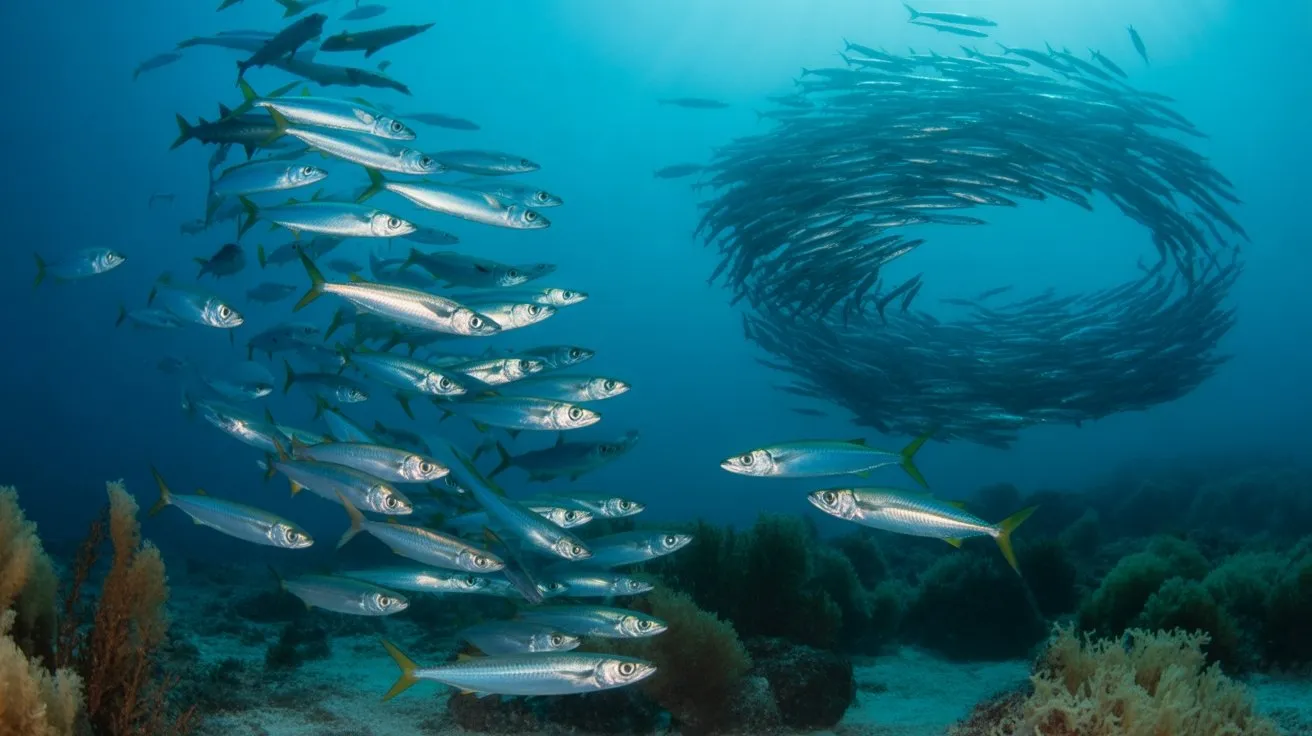
These energy-efficient swimming strategies have evolved across diverse marine environments, producing spectacular schooling displays in species ranging from massive herring aggregations to synchronized tuna formations.
You’ll encounter these remarkable behaviors across global ocean systems, where schooling represents a fundamental survival mechanism.
The most prominent schooling species demonstrate distinct behavioral patterns:
- Atlantic herring – Form dense aggregations exceeding millions of individuals during spawning migrations
- Yellowfin tuna – Display coordinated hunting formations in tropical waters
- Sardines – Create massive baitballs during annual migrations along continental shelves
- Mackerel – Exhibit synchronized swimming patterns in temperate oceanic zones
- Anchovies – Demonstrate rapid formation changes when responding to predator threats
These species showcase how schooling behavior adapts to specific ecological niches while maintaining core energy conservation principles.
Human Impact on Natural Schooling Patterns
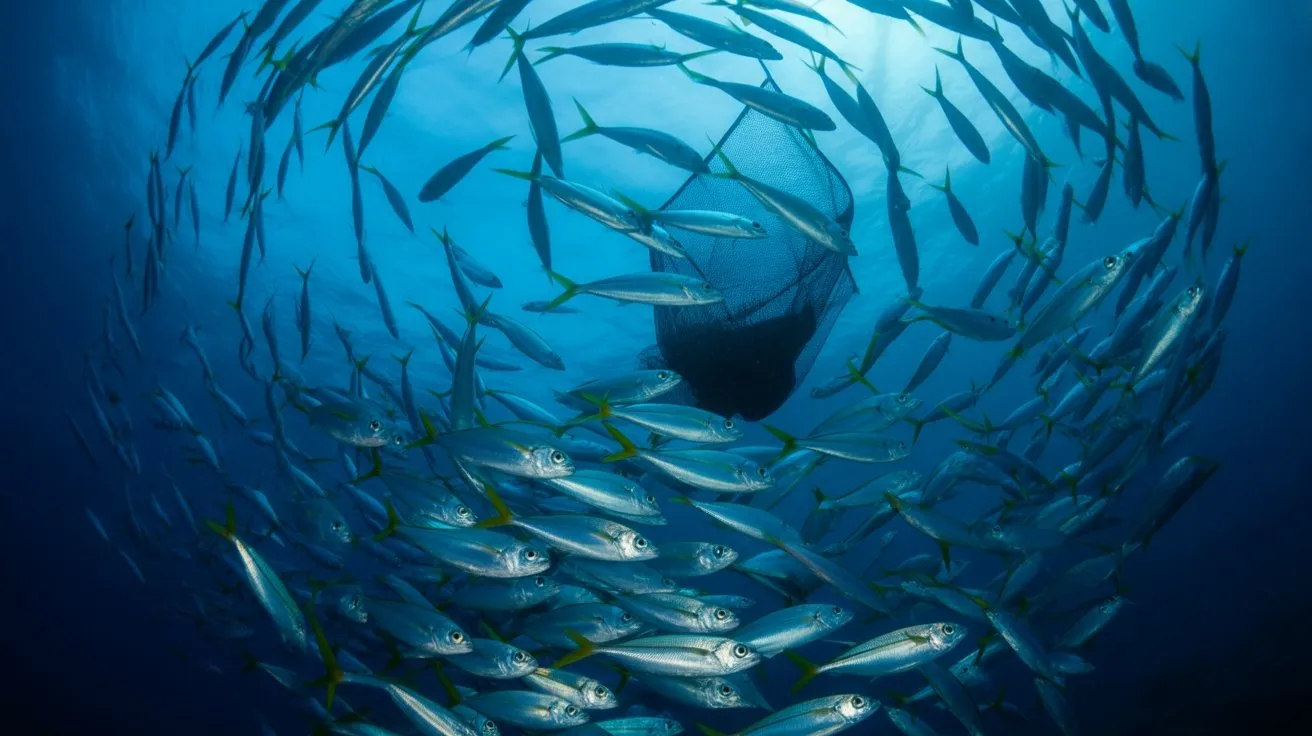
Commercial fishing operations have fundamentally altered schooling dynamics through overfishing pressures that reduce school sizes and disrupt traditional formation patterns.
You’ll observe that trawling activities fragment schools by forcing rapid dispersal responses, while selective harvesting removes larger individuals who typically lead formations.
Acoustic pollution from vessel engines interferes with the echolocation and lateral line systems fish use for maintaining group cohesion.
Climate change compounds these effects—you’re seeing temperature shifts that alter prey distributions, forcing schools to modify migration routes and timing.
Ocean acidification degrades chemosensory communication between individuals.
Coastal development destroys critical nursery habitats where juvenile schooling behaviors develop.
These cumulative stressors don’t just reduce population numbers; they fundamentally restructure the social architecture that’s evolved over millions of years in marine ecosystems. Additionally, overfishing not only threatens species survival but also disrupts entire marine ecosystems, leading to further complications in schooling behavior.
Conclusion
You’ve witnessed how schooling behavior represents millions of years of evolutionary refinement, where simple rules generate complex collective intelligence. When you observe a school’s synchronized movements, you’re seeing biomechanical efficiency that conserves energy while maximizing survival rates. Can you imagine oceanic ecosystems without these coordinated assemblages? Your understanding of lateral line communication systems and emergent behaviors reveals schooling’s critical role in marine biodiversity. However, anthropogenic disruptions increasingly threaten these ancient behavioral patterns worldwide.