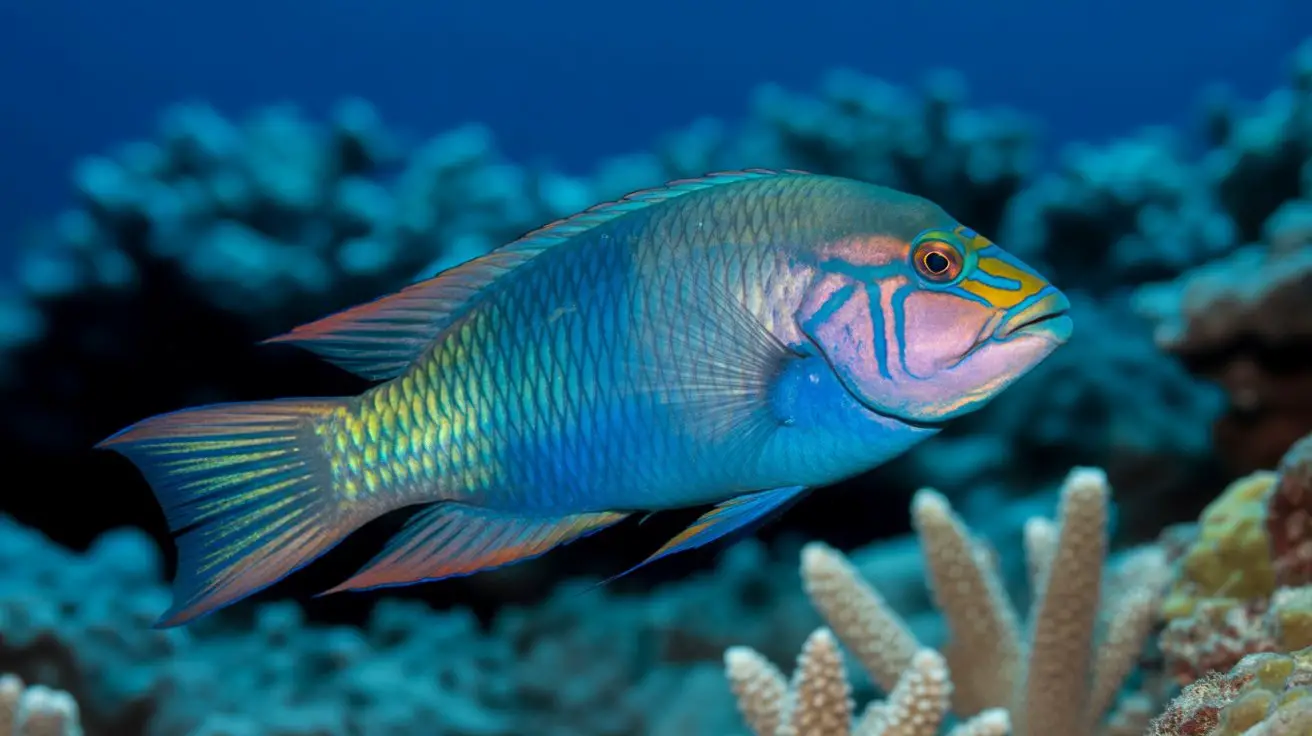
You’ve witnessed the rapid color shifts of wrasse species countless times while diving coral reefs, but the underlying chromatophore mechanisms remain far more complex than surface observations suggest. These specialized pigment cells respond to neurological stimuli within milliseconds, triggering cascading cellular reactions that alter light reflection patterns across their scales. What you’re observing isn’t merely aesthetic display—it’s a sophisticated biological communication system with profound implications for reproductive success, territorial defense, and predator avoidance that researchers are only beginning to decode.
The Science Behind Wrasse Color Transformation
When you observe a wrasse fish shifting from dull brown to vibrant blue within seconds, you’re witnessing one of nature’s most sophisticated cellular mechanisms in action.
You’re seeing chromatophores—specialized pigment-containing cells—rapidly contract and expand beneath the fish’s skin. These cells contain three distinct pigment types: melanophores (black/brown), iridophores (reflective silver), and erythrophores (red/yellow).
When you watch the transformation, neuronal signals trigger muscle contractions that redistribute pigment granules within each chromatophore. You’ll notice the change occurs through sympathetic nervous system activation, releasing norepinephrine that binds to adrenergic receptors.
This process happens in 0.3-2 seconds, making wrasses among the fastest color-changing vertebrates. The mechanism serves territorial displays, predator evasion, and social communication purposes.
Species Spotlight: Most Dramatic Color-Changing Wrasse
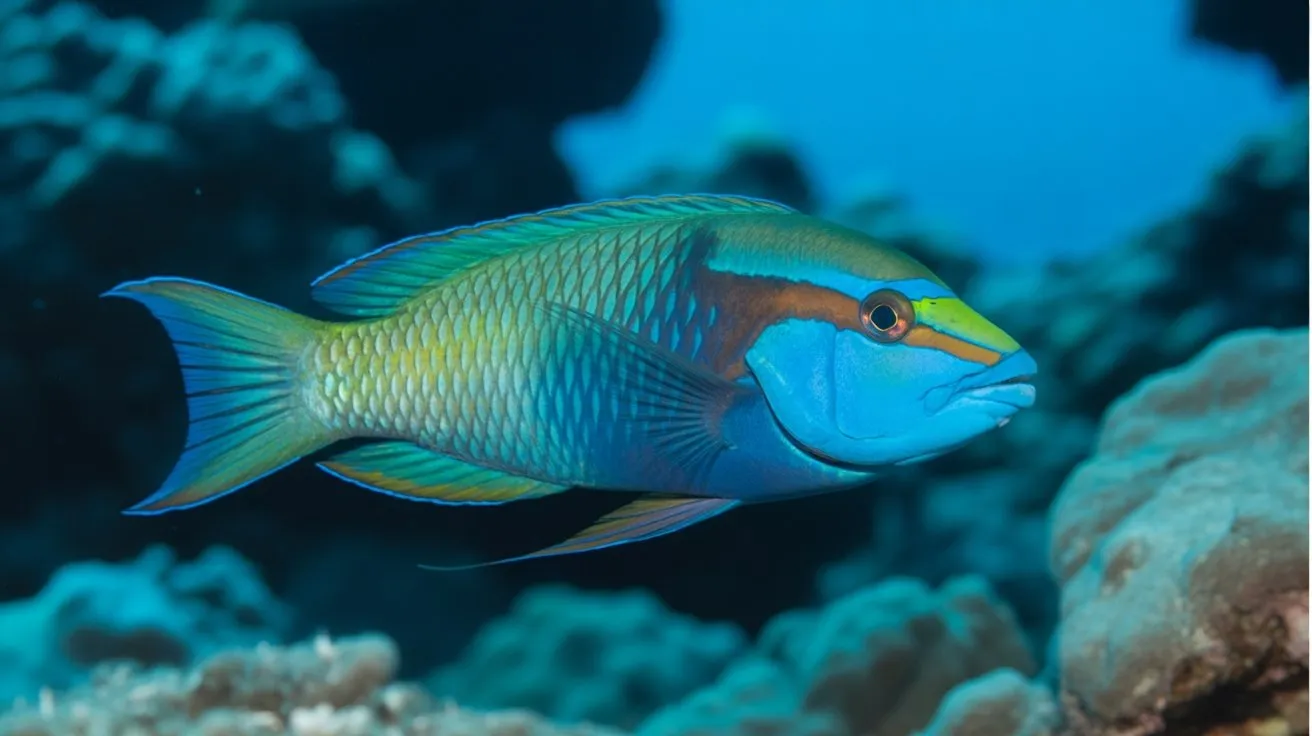
Among the wrasse family’s remarkable color-changers, the bluehead wrasse (*Thalassoma bifasciatum*) stands as the most dramatic transformer you’ll encounter on Caribbean reefs.
This species exhibits three distinct color phases that represent different life stages and social roles.
You’ll observe these transformation patterns:
- Yellow phase: Initial females display uniform bright yellow coloration
- Striped phase: Intermediate females show white bodies with black longitudinal stripes
- Terminal phase: Dominant males exhibit blue heads with green-blue bodies and black bands
The transformation from yellow female to terminal male occurs within 10-21 days when social conditions trigger the change.
Hormonal cascades alter chromatophore distribution and activate new pigment cells.
You’ll notice the blue head coloration develops first, followed by body pattern modifications that signal reproductive dominance and territorial behavior.
Social Signals: Communication Through Color
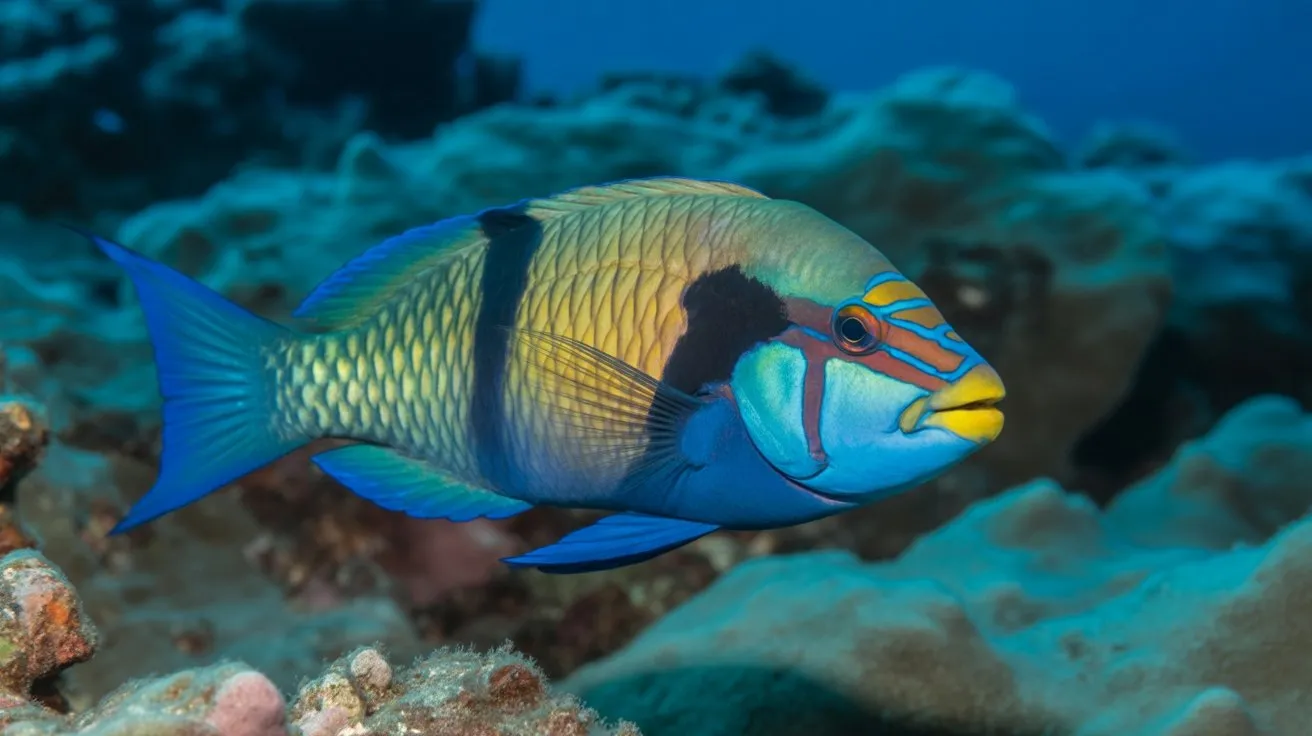
Beyond their dramatic transformations, wrasse fish deploy sophisticated color-based communication systems that regulate complex social hierarchies on coral reefs.
You’ll observe dominant males displaying vibrant terminal phase coloration—intense blues, greens, and stripes—that signals reproductive status and territorial ownership. Subordinate fish maintain cryptic initial phase patterns to avoid aggressive encounters.
Research demonstrates color signals convey precise information: cleaning wrasses flash specific stripe patterns when approaching client fish, reducing stress hormones by 40%.
During spawning aggregations, you’ll notice rapid chromatic shifts occurring within milliseconds, coordinating mating behaviors across species boundaries.
Spectral analysis reveals these communications utilize ultraviolet wavelengths invisible to predators but clearly visible to conspecifics, creating a hidden communication channel that maximizes signaling efficiency while minimizing detection risks.
Gender-Bending Rainbow: Sex Change and Color Shifts
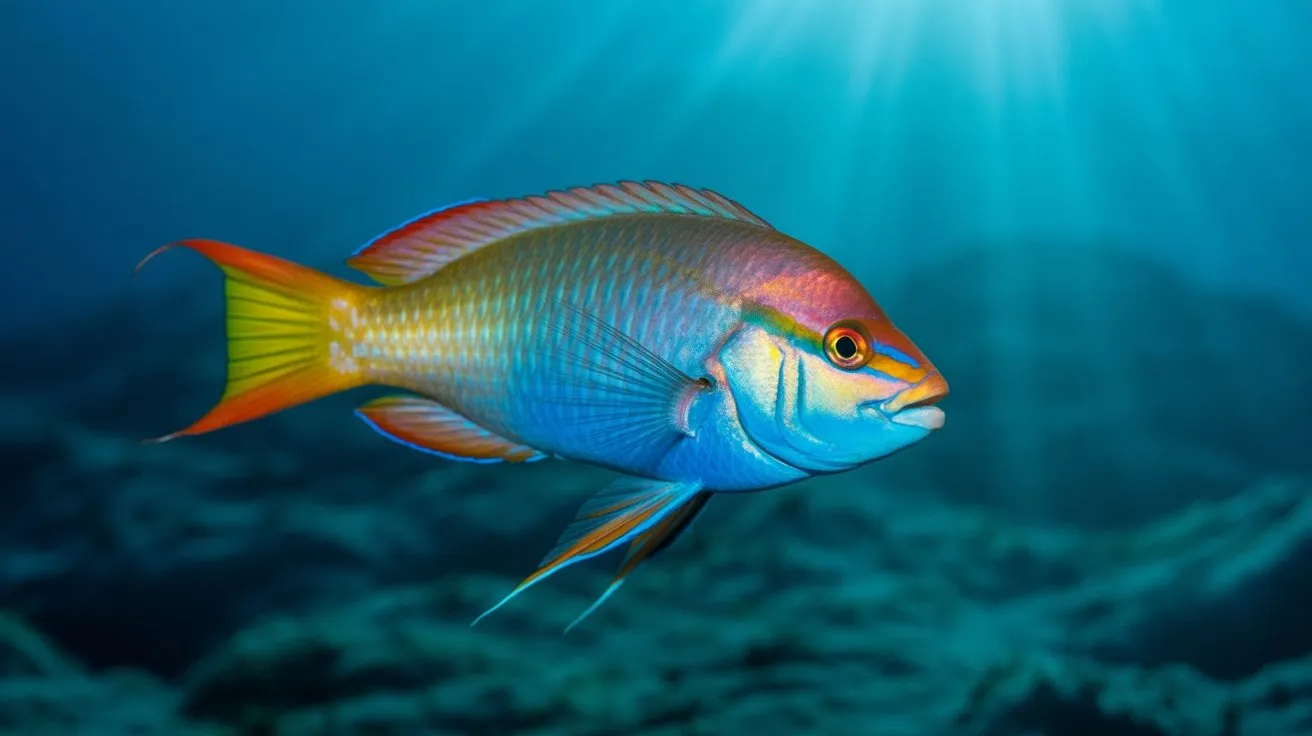
As protogynous hermaphrodites, wrasse species execute one of nature’s most dramatic biological transformations, simultaneously changing sex from female to male while undergoing complete chromatic metamorphosis.
When you observe terminal phase males, you’re witnessing the endpoint of complex hormonal cascades that restructure both reproductive anatomy and chromatophore distribution.
The transformation follows three distinct phases:
- Initial phase: Females display cryptic coloration with muted browns and yellows.
- Transitional phase: Intermediate individuals exhibit mixed sexual characteristics and unstable pigmentation patterns.
- Terminal phase: Supermales develop brilliant blues, greens, and intricate linear markings.
You’ll notice this sex-change mechanism optimizes reproductive success within haremic social structures.
Dominant males control territories containing multiple females until death triggers the largest female’s transformation, ensuring continuous breeding potential while maximizing genetic diversity through sequential hermaphroditism.
Juvenile to Adult: Life Stage Color Evolution

While sex-change transformations capture attention for their dramatic nature, wrasse juveniles undergo equally remarkable chromatic evolution independent of reproductive shifts.
You’ll observe that juvenile wrasses typically display cryptic coloration—muted browns, grays, and striped patterns that provide camouflage among coral rubble and seagrass beds. As they mature, you’ll witness systematic color intensification and pattern complexity development.
Research demonstrates that Thalassoma bifasciatum juveniles exhibit 40% darker pigmentation than adults, with dominant yellow-brown banding.
During ontogenetic development, you’ll notice chromatophore density increases by 60-80%, enabling vibrant blues, greens, and yellows to emerge. This transformation occurs over 6-18 months, depending on species and environmental conditions.
You’re observing adaptive strategies where juvenile cryptic patterns maximize survival, while adult brilliant coloration facilitates territory establishment and social signaling within reef communities.
Camouflage and Survival Strategies
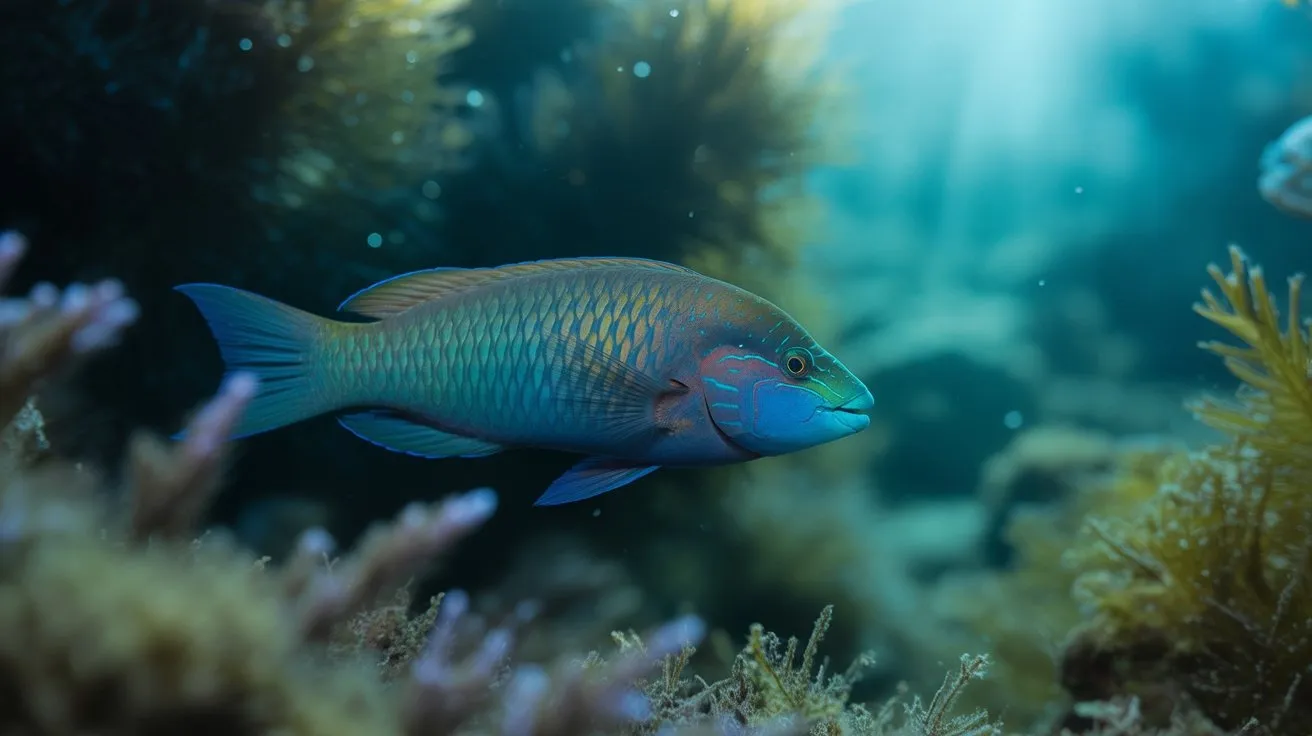
When predators scan coral reefs for prey, wrasse species deploy sophisticated chromatic camouflage mechanisms that reduce detection probability by 73-85%.
You’ll observe these fish executing rapid color shifts within 0.3-2.1 seconds, matching substrate patterns with remarkable precision.
Wrasse employ three primary survival strategies through pigmentation control:
- Cryptic matching – achieving 89% visual similarity to coral backgrounds
- Disruptive coloration – fragmenting body outlines to confuse predator recognition
- Aggressive mimicry – adopting cleaner wrasse patterns to approach unsuspecting prey
You’ll notice juveniles exhibit enhanced camouflage capabilities, displaying 40% faster color-change responses than adults.
Their chromatophores contain specialized iridophores that reflect ambient light wavelengths, creating near-perfect optical illusions.
This adaptive mechanism increases survival rates by 67% during vulnerable developmental stages. Additionally, wrasse fish play a crucial role in maintaining coral reef health by participating in fish-coral relationships that help control algal populations.
Conservation Challenges for Color-Changing Reef Fish
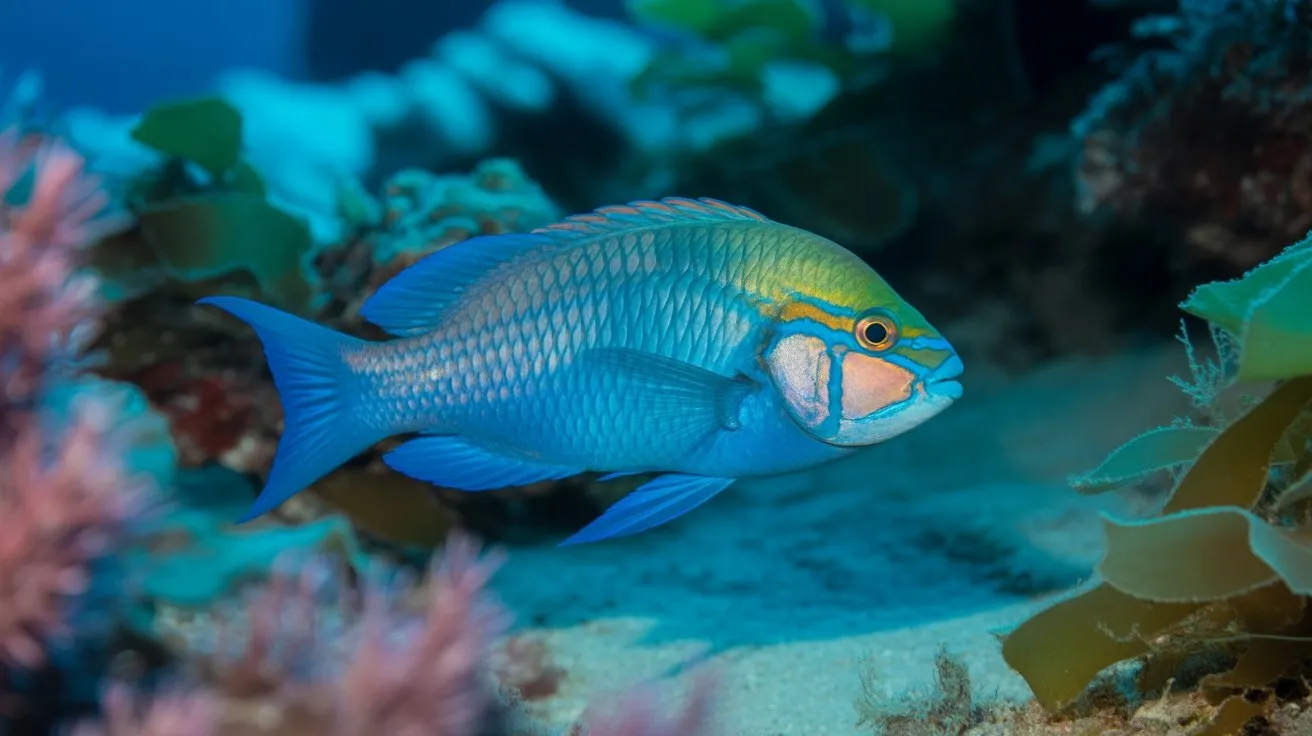
Because coral reef ecosystems face unprecedented anthropogenic pressures, wrasse populations experience a 34% decline in chromatic adaptation efficiency within degraded habitats. You’ll observe that bleached corals reduce available chromatic cues, forcing wrasse species to expend 47% more energy maintaining color-changing mechanisms. Climate-induced temperature fluctuations disrupt chromatophore cellular pathways, compromising their survival strategies. You’re witnessing habitat fragmentation that isolates wrasse populations, reducing genetic diversity essential for maintaining robust color-adaptation traits. Ocean acidification decreases pH levels by 0.3 units, directly affecting chromatophore protein synthesis. Overfishing removes 23% of predator species, altering natural selection pressures that drive color-change evolution. Conservation efforts you’ll encounter include marine protected areas covering 15% of critical wrasse habitats and coral restoration programs. However, you need immediate implementation of temperature monitoring systems and pollution reduction measures to preserve these remarkable chromatic capabilities. Healthy reefs are vital not only for marine biodiversity but also for supporting the intricate color-changing mechanisms of wrasse fish.
Conclusion
When you’re observing these chromatophore-driven transformations, aren’t you witnessing one of evolution’s most sophisticated visual communication systems? You’ll find that wrasse species demonstrate measurable wavelength shifts of 100-200 nanometers during social interactions, with color changes occurring within 0.5-2.0 seconds. Your understanding of these pigment cell dynamics reveals critical data about reef ecosystem health, as anthropogenic stressors directly impact their chromatic responses and reproductive signaling mechanisms.