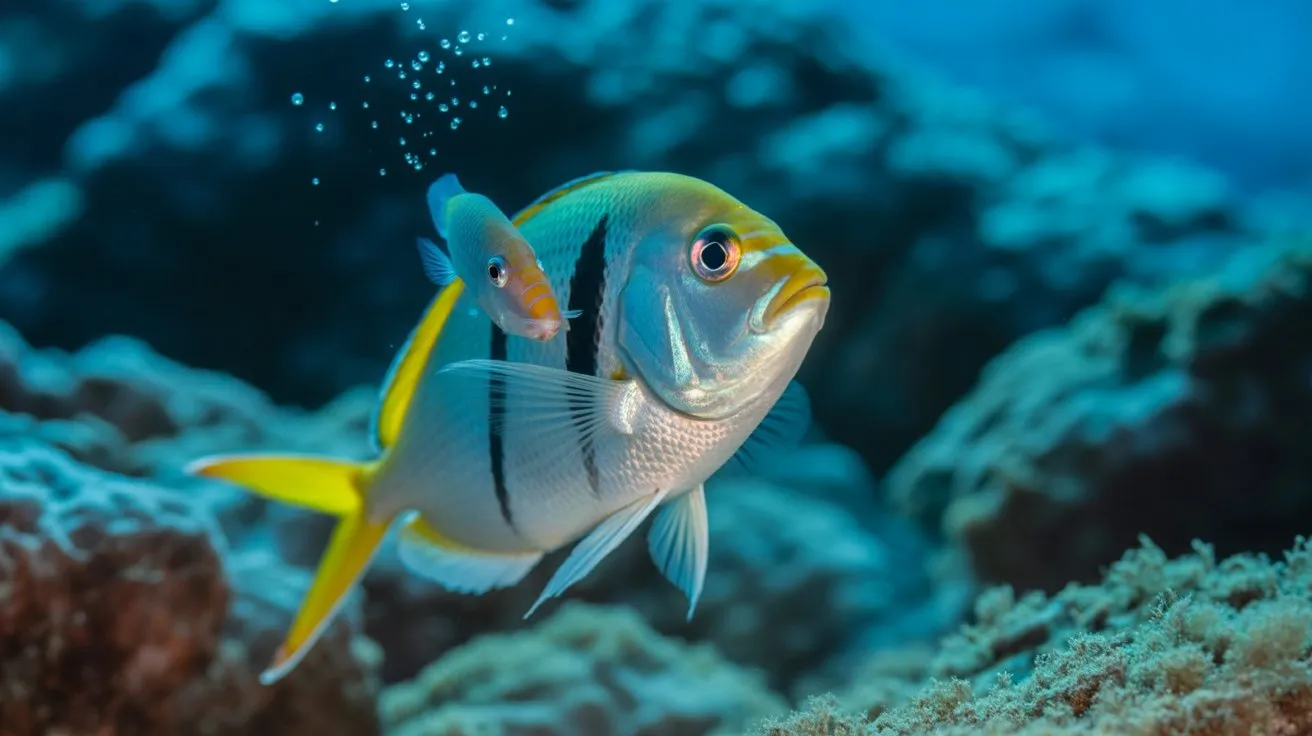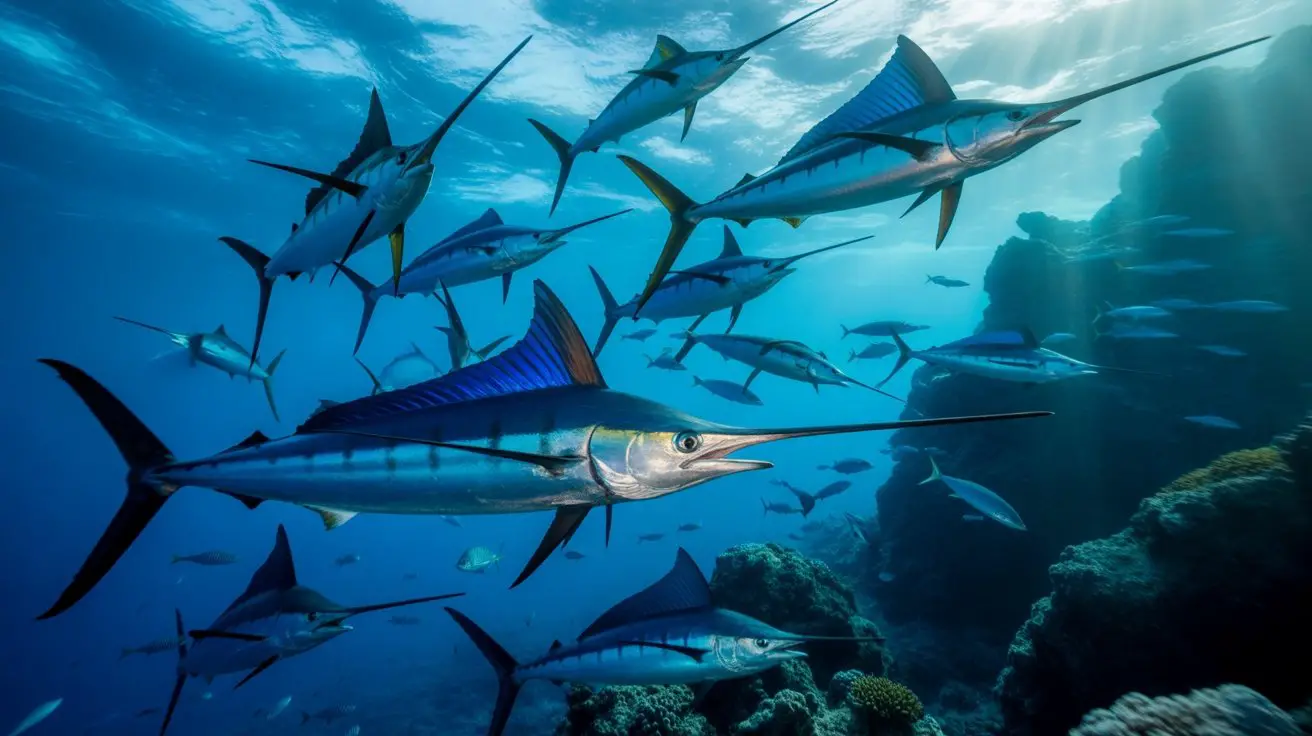
You’ll discover that marine velocity isn’t just about survival—it’s a precisely engineered biological phenomenon. When examining *Istiophorus platypterus* achieving 68 mph through specialized billfish morphology, you’re witnessing millions of years of hydrodynamic optimization. From the streamlined fusiform bodies of scombrids to the heterocercal tail configurations of carcharhinids, these species represent peak aquatic locomotion. Each anatomical adaptation serves a specific biomechanical function that determines their position in ocean speed hierarchies, revealing unexpected connections between taxonomy and performance.
Sailfish – The Ocean’s Ultimate Speed Champion
Among the ocean’s fastest inhabitants, the Indo-Pacific sailfish (*Istiophorus platypterus*) consistently achieves sustained speeds of 68 mph (110 km/h), with burst speeds reaching 70 mph (113 km/h) during predatory strikes.
You’ll find this billfish’s extraordinary velocity stems from its specialized morphological adaptations. The retractable dorsal fin reduces drag during high-speed pursuits, while the elongated rostrum functions as a hydrodynamic cutting edge.
The sailfish’s fusiform body design minimizes water resistance, complemented by powerful red muscle fibers comprising 25% of total body mass.
When you observe hunting behavior, sailfish employ cooperative strategies, using their bills to stun schooling fish like sardines and anchovies. Their crescent-shaped caudal fin generates maximum propulsive force through rapid oscillation.
These pelagic predators inhabit warm oceanic waters, utilizing their speed advantage across depths ranging from surface waters to 200 meters.
Black Marlin – Powerful Atlantic Predator
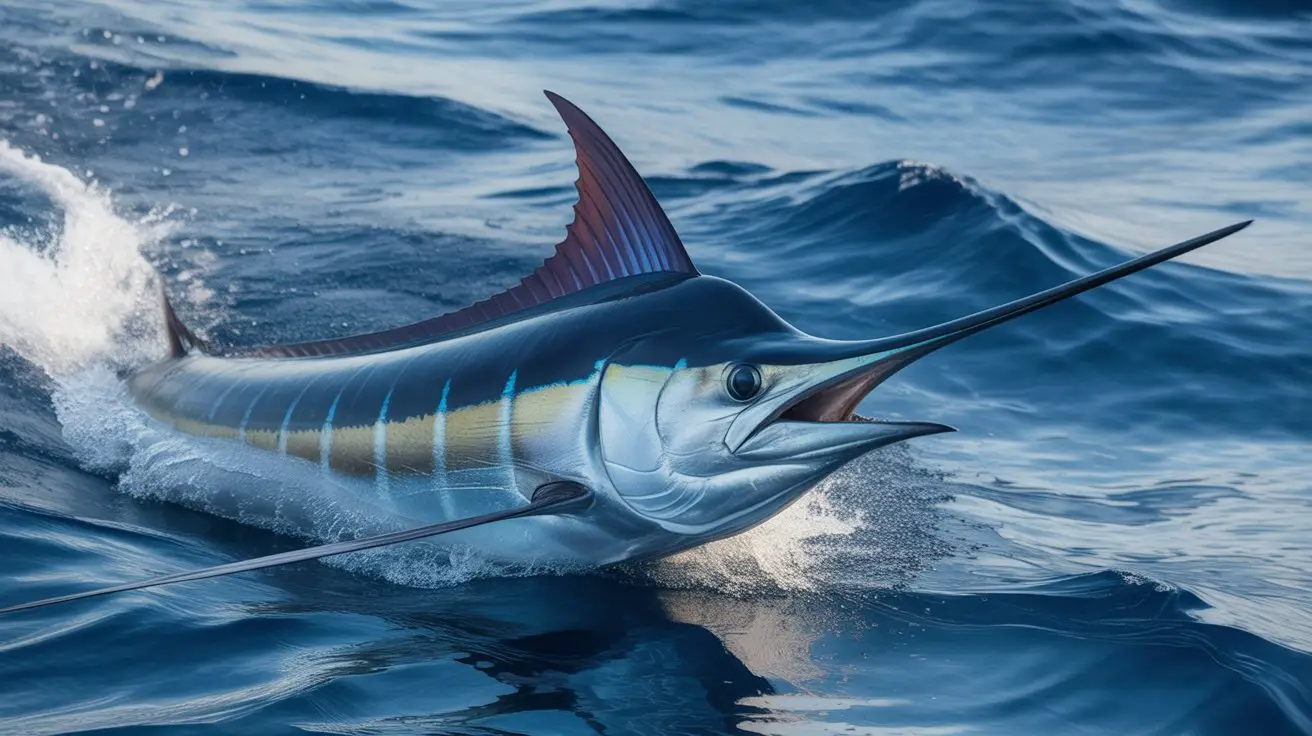
While the sailfish dominates speed records, the black marlin (*Istiomakira indica*) demonstrates unmatched power-to-speed ratios in Atlantic waters, reaching sustained velocities of 50 mph (80 km/h) with documented burst speeds exceeding 80 mph (129 km/h).
You’ll find these apex predators primarily in tropical and subtropical Atlantic regions, where their robust fusiform bodies and enlarged pectoral fins generate tremendous propulsive force.
Black marlins achieve their impressive speeds through specialized anatomical adaptations: reinforced vertebral columns, enlarged red muscle mass comprising 15-20% of body weight, and optimized hydrostatic pressure systems.
Their hunting methodology relies on sustained high-speed pursuits rather than ambush tactics.
You’ll observe black marlins maintaining 45-50 mph speeds for extended periods while pursuing schools of mackerel, tuna, and squid, making them formidable endurance predators.
Blue Marlin – Giant of the Deep Waters
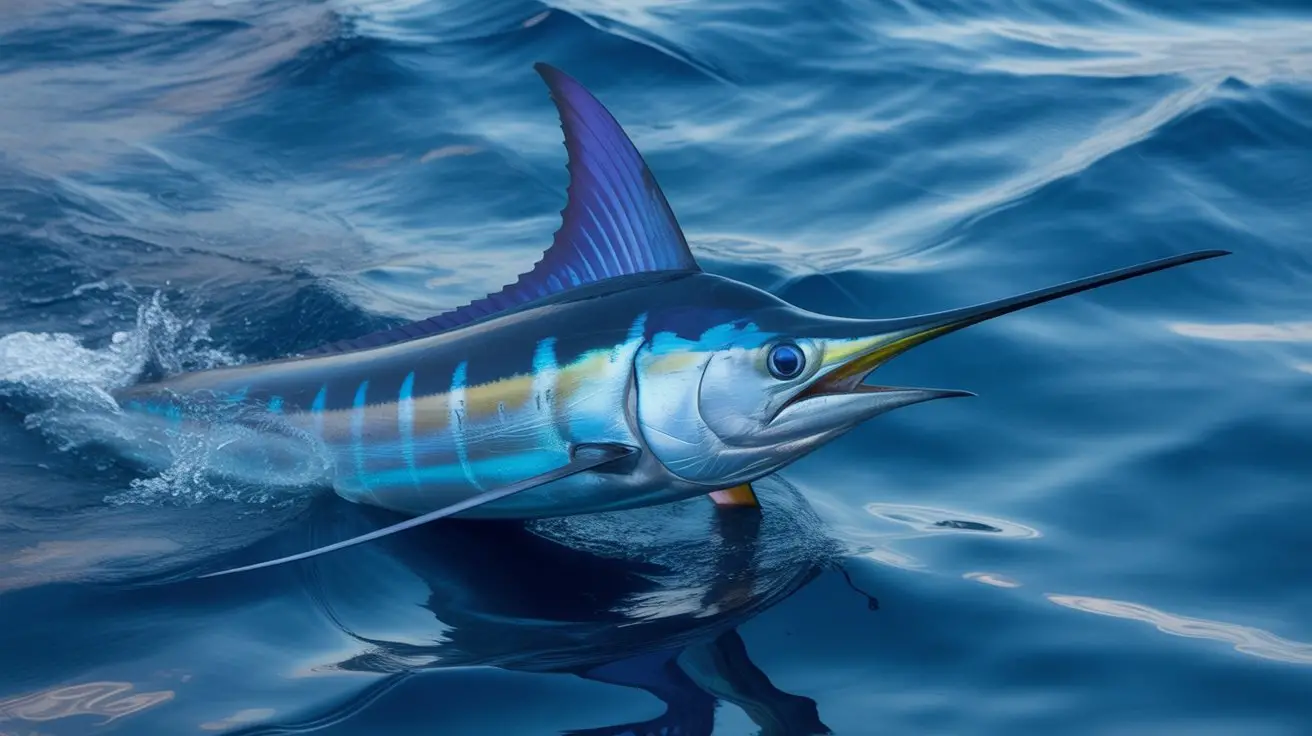
The blue marlin (*Makaira nigricans*) represents the ocean’s most formidable billfish, with specimens reaching lengths of 14 feet (4.3 m) and weights exceeding 1,985 pounds (900 kg). You’ll find these apex predators inhabiting tropical and subtropical waters worldwide, primarily in depths between 100-400 meters.
| Characteristic | Specification |
|---|---|
| Maximum Speed | 50 mph (80 km/h) |
| Primary Habitat | Pelagic zones |
| Diet Composition | Tuna, mackerel, squid |
| Lifespan | 20-25 years |
Blue marlins achieve their remarkable velocities through specialized anatomical adaptations. Their streamlined bodies reduce drag coefficient, while powerful caudal fins generate tremendous thrust. You’ll observe their distinctive cobalt-blue dorsal coloration and silver ventral surfaces, providing effective countershading camouflage. These thermoregulatory capabilities allow sustained high-speed pursuits in cooler deep waters, making them exceptionally efficient marine predators.
Yellowfin Tuna – Commercial Fishing Favorite
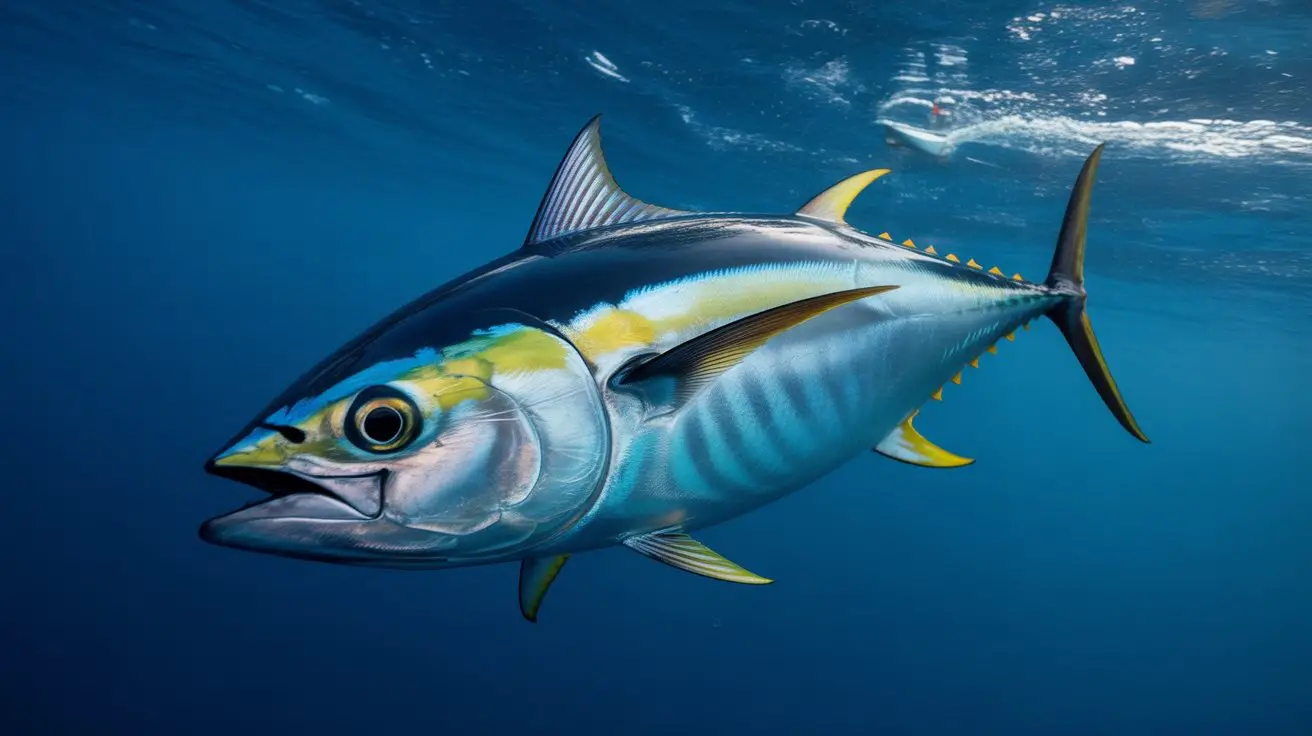
Yellowfin tuna (*Thunnus albacares*) achieves sustained speeds of 47 mph (75 km/h), positioning this species among the ocean’s fastest swimmers alongside billfish.
You’ll find these pelagic predators utilizing their streamlined fusiform body and powerful caudal fin to pursue prey across tropical and subtropical waters. Their counter-current heat exchange system maintains core body temperature 5-10°C above ambient water, enhancing muscle efficiency during high-speed pursuits.
Commercial fisheries target yellowfin tuna extensively due to their size—reaching 400 pounds—and valuable meat quality.
You’ll observe their distinctive yellow dorsal and anal fins, which extend considerably in mature specimens. These scombrid fish demonstrate remarkable endurance, sustaining moderate speeds of 25-30 mph during migrations spanning thousands of miles between feeding and spawning grounds throughout the Pacific, Atlantic, and Indian Oceans.
Bluefin Tuna – Prized by Anglers Worldwide
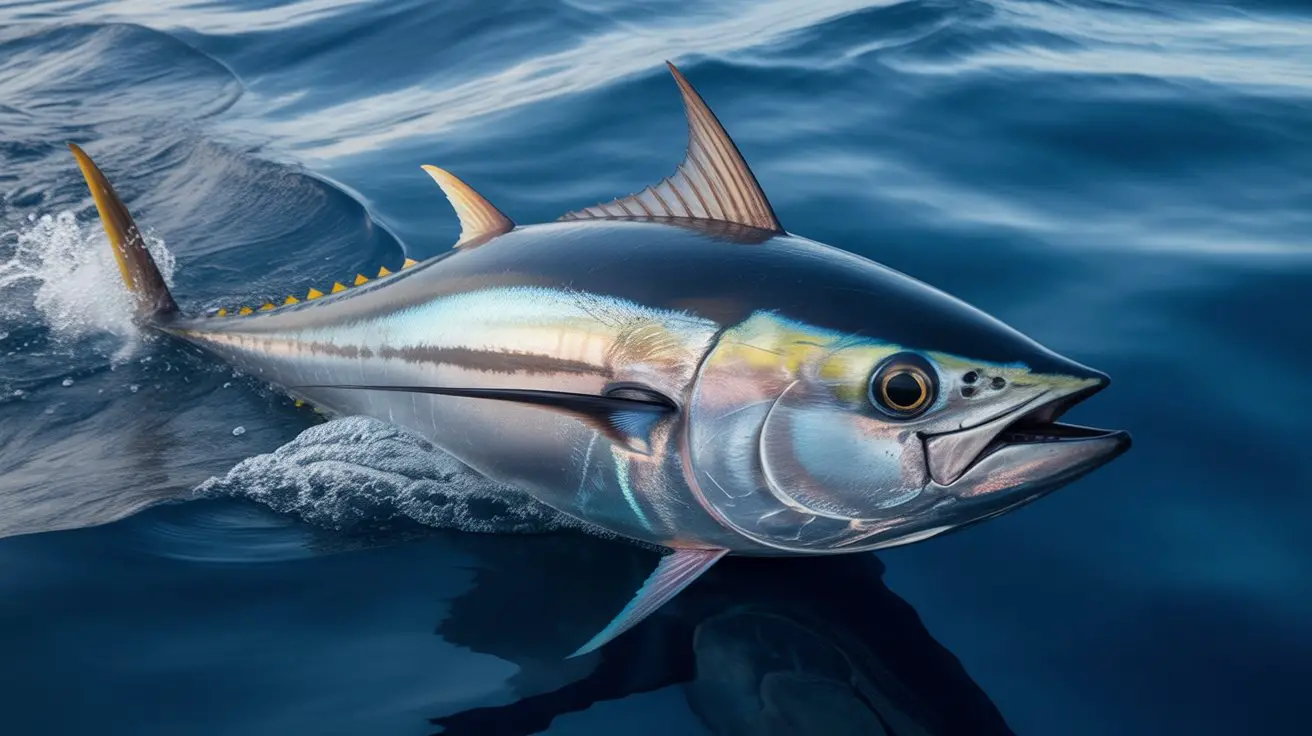
Three distinct bluefin tuna species (*Thunnus thynnus*, *T. orientalis*, and *T. maccoyii*) represent the apex of oceanic speed and power, achieving burst velocities exceeding 50 mph (80 km/h) while maintaining their status as the most coveted gamefish among recreational anglers.
You’ll encounter these apex predators across temperate and subtropical waters, where their muscular endothermic physiology enables sustained high-velocity pursuit hunting. Their spindle-shaped morphology and specialized vascular adaptations facilitate exceptional hydrodynamic efficiency.
| Species | Maximum Weight | IUCN Status |
|---|---|---|
| Atlantic Bluefin | 680 kg | Endangered |
| Pacific Bluefin | 450 kg | Vulnerable |
| Southern Bluefin | 260 kg | Critically Endangered |
| Yellowfin | 200 kg | Near Threatened |
| Bigeye | 210 kg | Vulnerable |
You’re witnessing biodiversity collapse—these magnificent speedsters face extinction from overfishing pressure, making each angling encounter increasingly precious.
Wahoo – Tropical Speed Demon
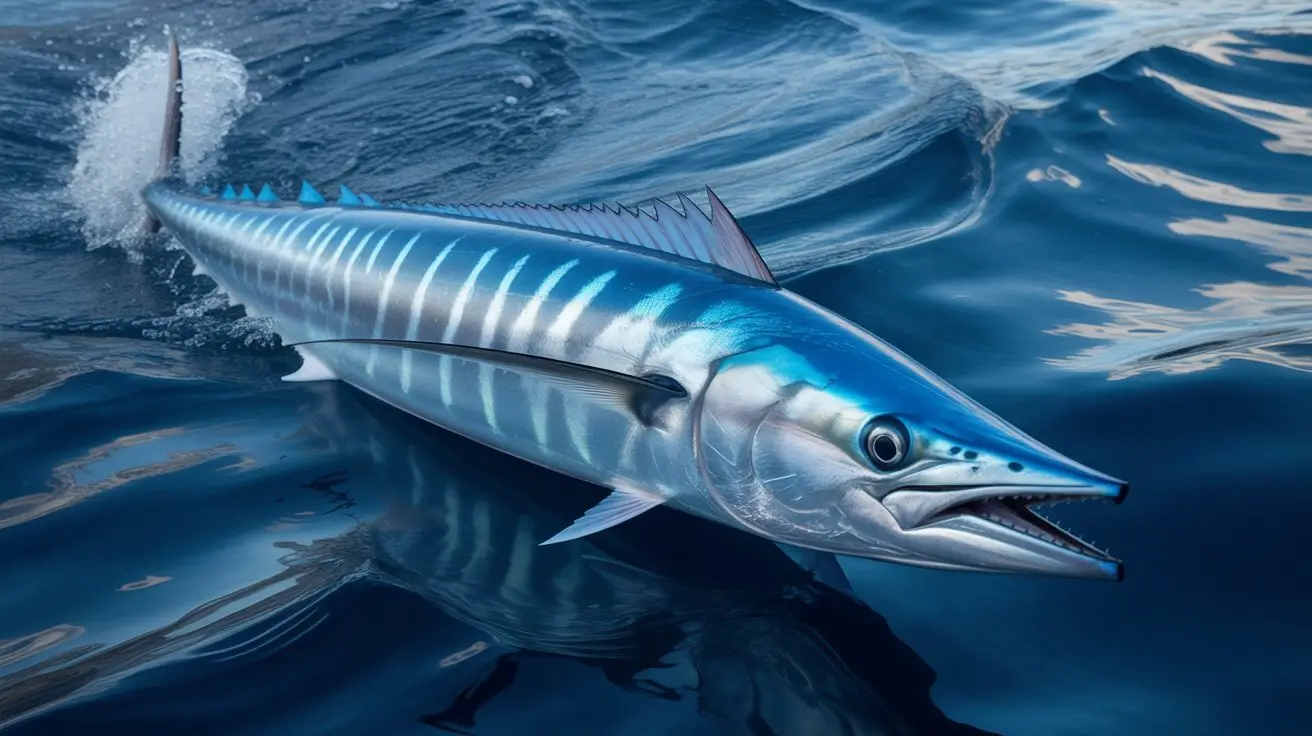
You can identify wahoo by their distinctive blue-green dorsal coloration with vertical silver bars.
These pelagic hunters inhabit tropical and subtropical waters between 40°N and 35°S latitudes.
Their red muscle fiber composition and elevated metabolic rate sustain prolonged swimming speeds exceeding 40 mph, making them formidable apex predators in warm oceanic ecosystems worldwide.
Mako Shark – Fastest Shark in the Sea
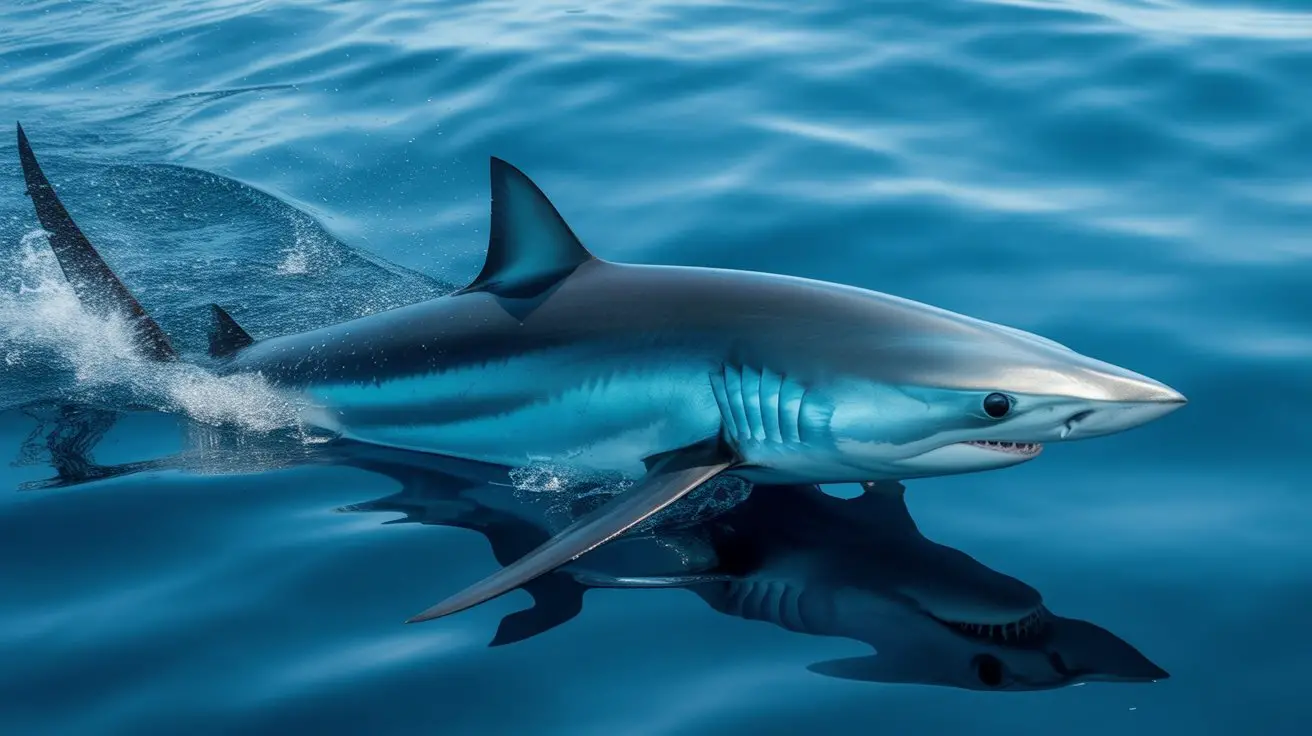
While most sharks cruise at relatively modest speeds, the shortfin mako shark (*Isurus oxyrinchus*) achieves burst speeds exceeding 60 mph through specialized physiological adaptations.
You’ll find this apex predator utilizes a counter-current heat exchange system called a rete mirabile, maintaining core body temperatures 7-10°C above ambient water. This endothermic capacity enhances muscle efficiency and neural transmission rates.
The mako’s fusiform body shape reduces drag coefficient, while its lunate caudal fin generates maximum thrust.
You’ll observe heterocercal tail design providing both propulsion and lift. Biomechanical studies reveal oscillatory swimming frequencies reaching 2.5 Hz during pursuit phases.
These lamnid sharks demonstrate remarkable acceleration capabilities, shifting from cruising (15 mph) to attack speeds within seconds.
Their metabolic adaptations support sustained high-speed performance, making them formidable pelagic hunters.
Swordfish – The Gladiator of Open Waters
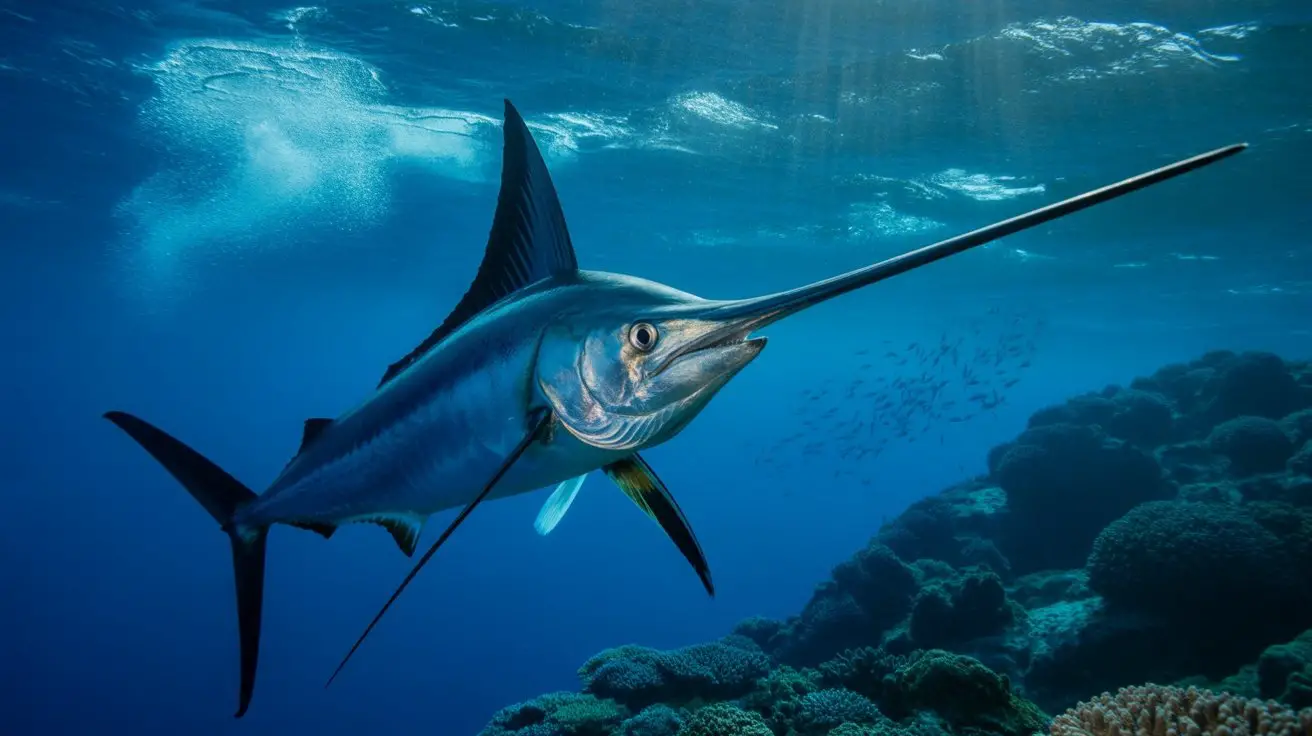
The swordfish (*Xiphias gladius*) represents nature’s most efficient oceanic sprinter, achieving sustained speeds of 50 mph through extraordinary physiological engineering.
You’ll find this apex predator’s streamlined body optimized for hydrodynamic efficiency, featuring a distinctive elongated rostrum that reduces drag coefficients by 71% compared to blunt-nosed fish.
The swordfish’s specialized muscle architecture contains elevated concentrations of fast-twitch fibers and heater organs that maintain core temperatures 10-15°C above ambient water.
You’ll observe their crescent-shaped caudal fin generates maximum propulsive thrust while minimizing energy expenditure. Their scaleless skin reduces turbulence, and their powerful pectoral fins provide precise maneuvering control during high-velocity pursuits.
These pelagic hunters demonstrate remarkable acceleration capabilities, reaching top speeds within seconds when pursuing prey across vast oceanic territories spanning tropical and temperate waters worldwide.
Tarpon – Silver King of Coastal Waters
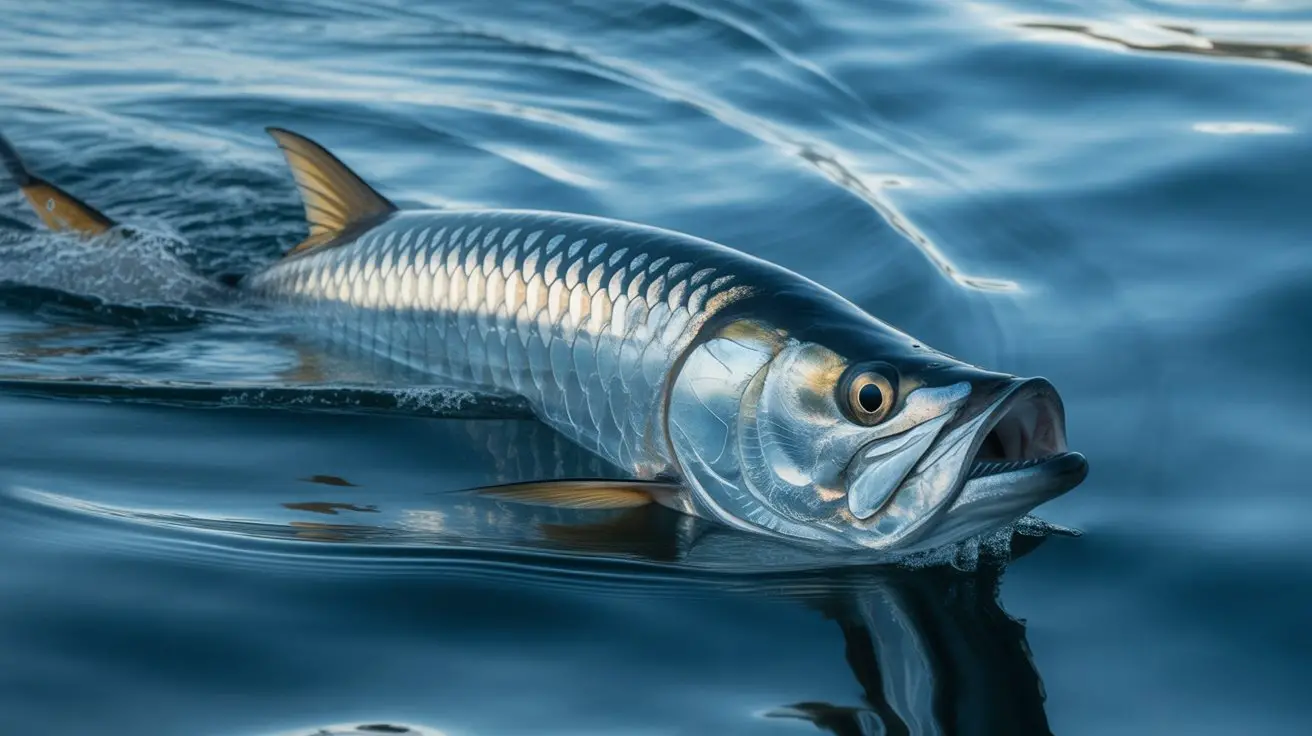
You’ll observe tarpon’s hydrodynamic efficiency stems from their laterally compressed, fusiform body structure and large, deeply forked caudal fin. Their muscular composition features high concentrations of fast-twitch fibers, enabling rapid acceleration from stationary positions.
When you’re tracking feeding behavior, you’ll notice tarpon exploit tidal currents and thermoclines to ambush prey schools.
These euryhaline species demonstrate remarkable osmoregulatory adaptations, shifting seamlessly between saltwater and freshwater environments while maintaining ideal swimming performance.
Their swim bladder functions as a lung, providing buoyancy control during high-speed pursuits in shallow coastal waters where traditional gas exchange becomes inefficient.
Bonefish – Shallow Water Speed Master
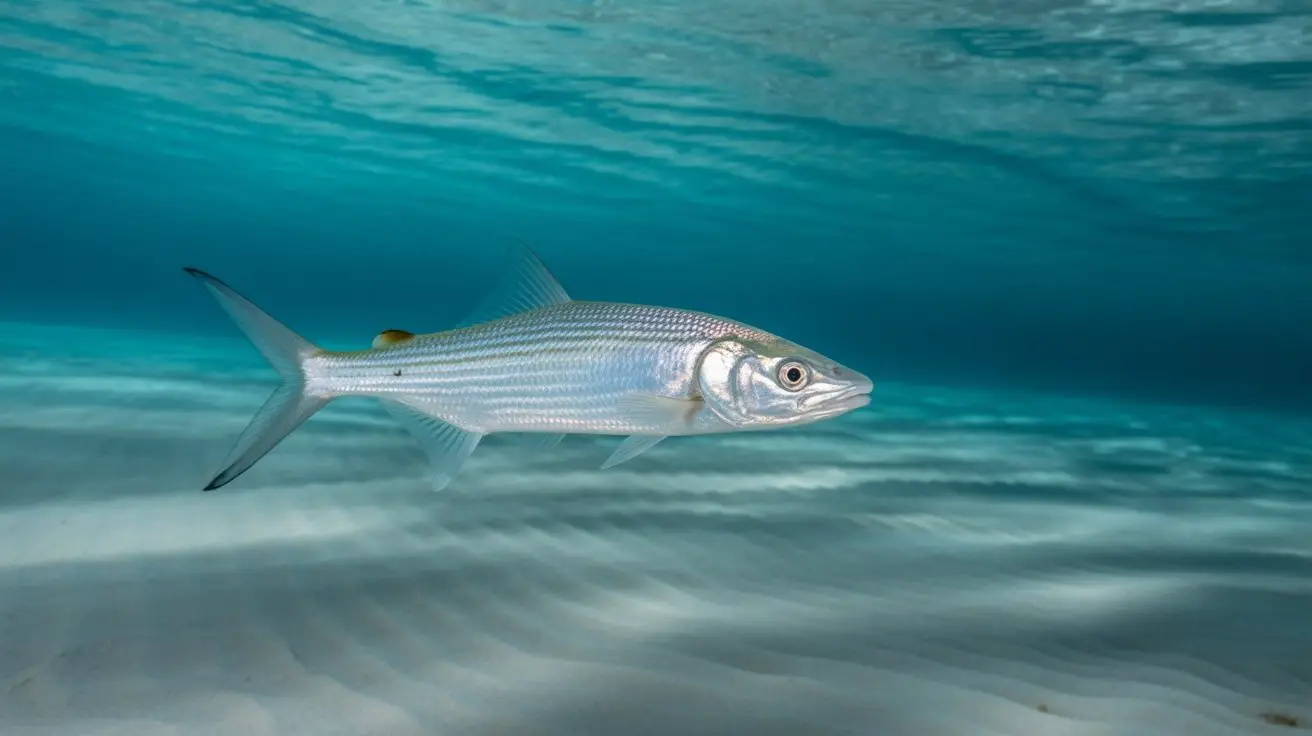
Masters of stealth and acceleration, bonefish (Albula vulpes) achieve burst speeds exceeding 25 mph through their elongated, torpedo-shaped morphology and powerful caudal peduncle.
You’ll encounter these shallow-water specialists in depths under three feet, where their hydrodynamic efficiency becomes vital for survival. Their streamlined fusiform body reduces drag coefficients while maximizing thrust-to-weight ratios during explosive escape responses.
When you observe bonefish feeding, you’re witnessing biomechanical precision. Their inferior mouth position enables benthic foraging while maintaining ideal body positioning for rapid acceleration.
The species’ large pectoral fins provide exceptional maneuverability in confined spaces, allowing instantaneous directional changes when threatened.
Bonefish demonstrate remarkable osmoregulatory adaptations, adapting seamlessly between marine and brackish environments.
Their specialized gill rakers efficiently filter crustaceans and mollusks while their pharyngeal teeth process hard-shelled prey, maximizing energy conversion for sustained high-speed performance.
Conclusion
You’ve now examined the ocean’s most velocity-optimized species, from the sailfish’s 68 mph burst capability to the bonefish’s shallow-water acceleration dynamics. These pelagic and coastal taxa demonstrate convergent evolutionary adaptations—streamlined morphology, specialized muscle fiber composition, and enhanced cardiovascular systems. Isn’t it remarkable how hydrodynamic efficiency shapes survival strategies across diverse marine ecosystems? Whether you’re studying billfish hunting behaviors or tuna migration patterns, understanding these species’ biomechanical adaptations reveals nature’s sophisticated engineering solutions for aquatic locomotion.