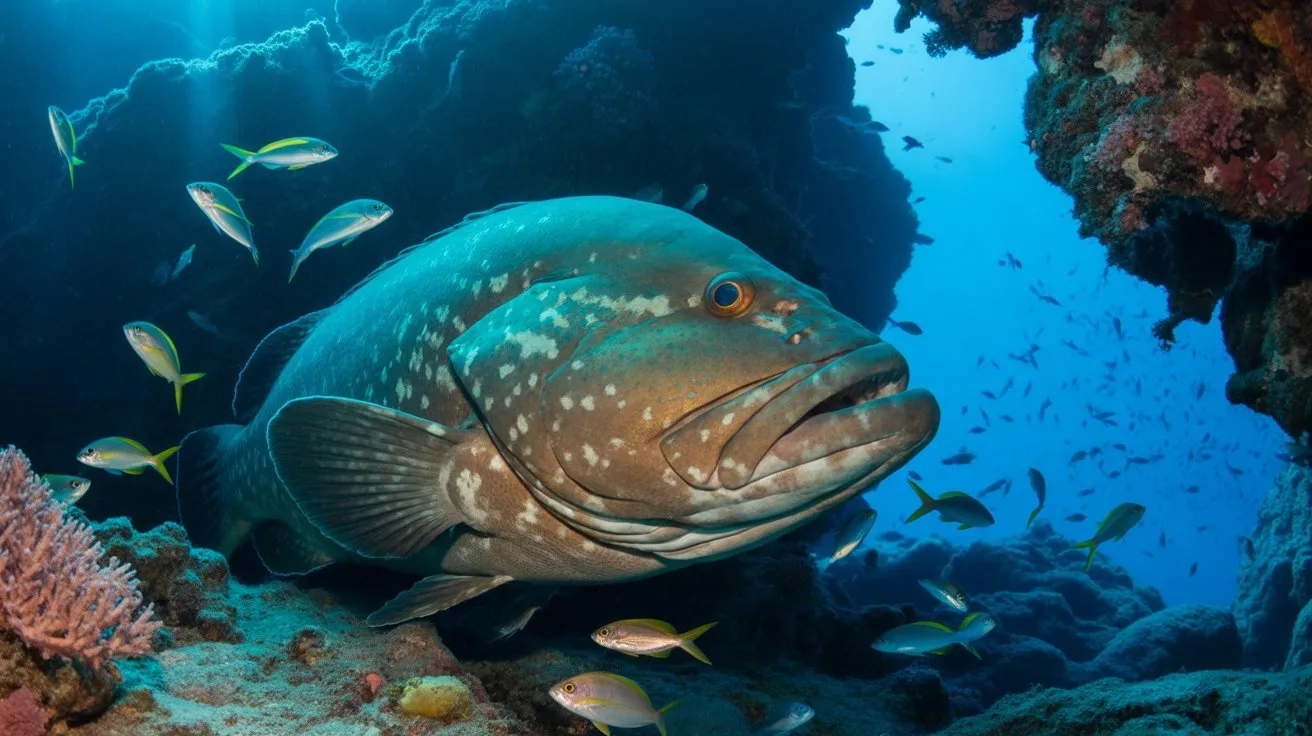
You’d be amazed to learn that goliath groupers can live over 37 years and grow larger than most humans at 8 feet long. These apex predators demonstrate complex behavioral patterns through low-frequency vocalizations that travel vast underwater distances. What’s particularly striking isn’t just their impressive size—it’s how their sophisticated hunting techniques and remarkable physiological adaptations have evolved to dominate reef ecosystems, yet their survival now hangs in an unexpected balance.
Anatomy and Physical Characteristics of Groupers
Groupers exhibit remarkable anatomical adaptations that establish them as apex predators within coral reef ecosystems.
You’ll observe their massive, elongated bodies reaching lengths of 8 feet and weights exceeding 880 pounds in species like the Atlantic goliath grouper. Their oversized mouths contain pharyngeal teeth that crush prey with tremendous force. You’ll notice their protrusible jaws create powerful suction, enabling them to engulf fish nearly half their size instantaneously.
Their swim bladders produce low-frequency vocalizations for communication and territorial displays. You’ll find their cryptic coloration patterns provide exceptional camouflage against coral substrates.
Their robust pectoral fins generate precise maneuverability within complex reef structures, while their hermaphroditic reproductive system optimizes breeding success in variable population densities.
Species Diversity and Global Distribution
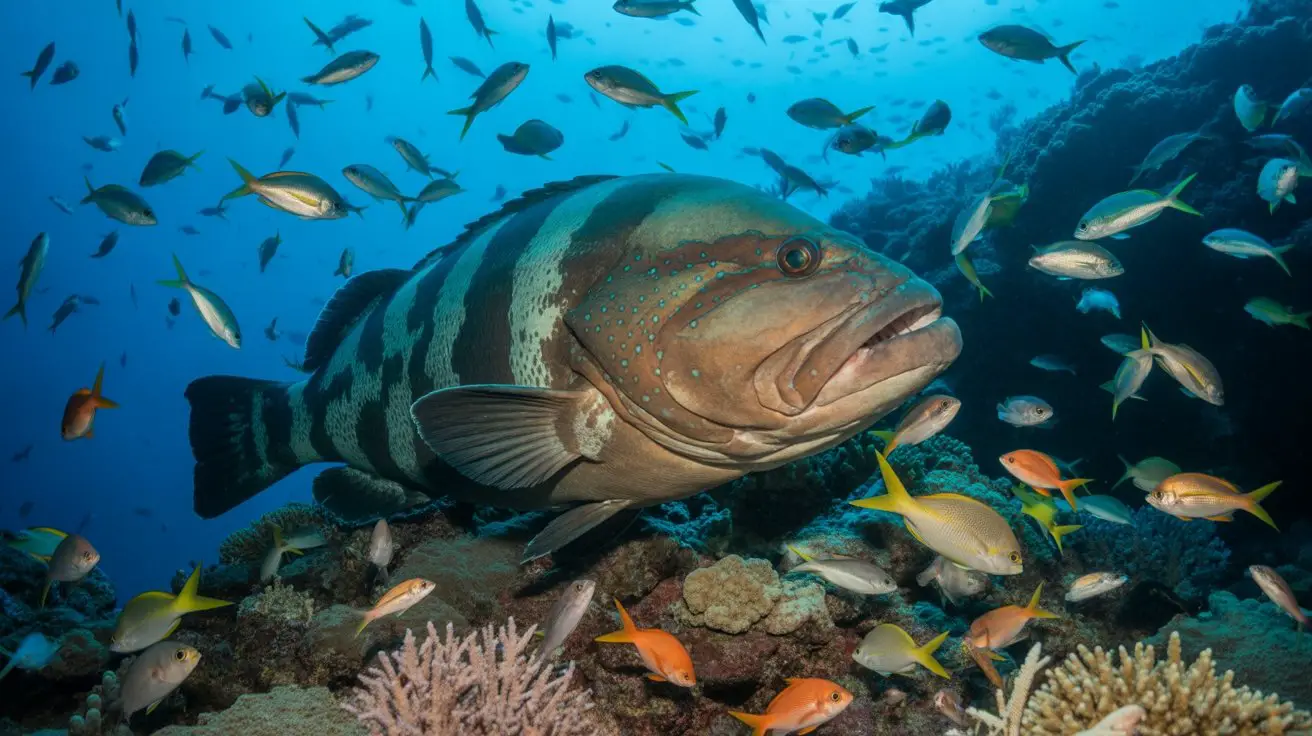
While taxonomists have identified over 160 species within the Epinephelidae family, you’ll find these marine giants distributed across tropical and subtropical waters spanning three major ocean basins. Pacific waters harbor the greatest diversity with 89 documented species, followed by the Atlantic’s 45 species and the Indian Ocean’s 38 species.
| Ocean Basin | Species Count | Dominant Genera | Depth Range (m) | Temperature Range (°C) |
|---|---|---|---|---|
| Pacific | 89 | Epinephelus, Mycteroperca | 1-400 | 18-30 |
| Atlantic | 45 | Epinephelus, Cephalopholis | 5-200 | 20-28 |
| Indian | 38 | Epinephelus, Plectropomus | 2-300 | 22-29 |
| Caribbean | 22 | Mycteroperca, Epinephelus | 1-150 | 24-30 |
| Red Sea | 15 | Cephalopholis, Variola | 3-100 | 21-32 |
You’ll encounter maximum endemism rates in isolated archipelagos and coral triangle regions.
Hunting Strategies and Feeding Behavior
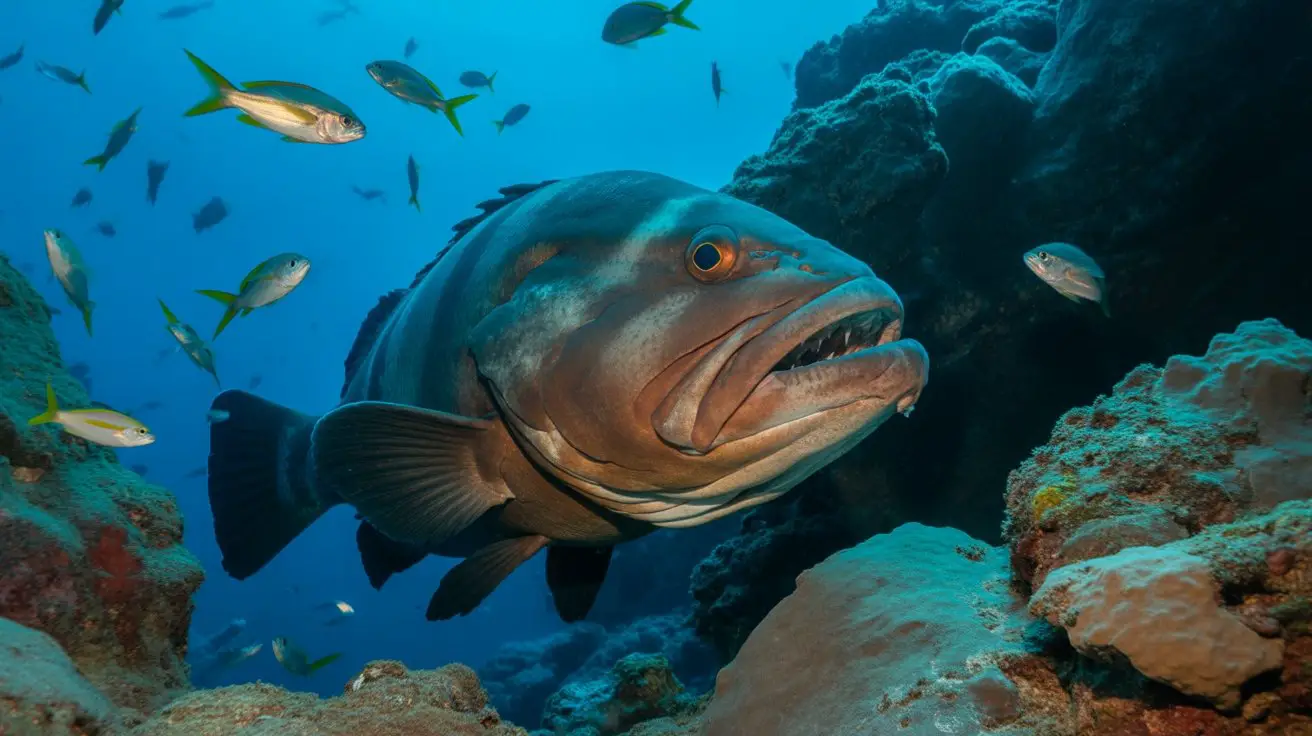
Despite their imposing size, these apex predators employ remarkably sophisticated ambush tactics that maximize energy efficiency while securing prey.
You’ll observe groupers positioning themselves near coral formations, cave entrances, or rocky outcrops where they remain motionless for extended periods. Their cryptic coloration provides exceptional camouflage against reef substrates.
When prey approaches within striking distance—typically 1-2 body lengths—you’ll witness explosive acceleration reaching speeds of 40 mph in milliseconds.
Their massive pharyngeal cavity creates powerful suction forces of up to 0.2 atmospheres, effectively vacuuming prey items. Studies document groupers consuming fish up to 60% of their own body length.
You’ll find their diet includes reef fish, crustaceans, cephalopods, and occasionally sea turtles, demonstrating opportunistic feeding behavior across multiple trophic levels.
Color-Changing Abilities and Communication
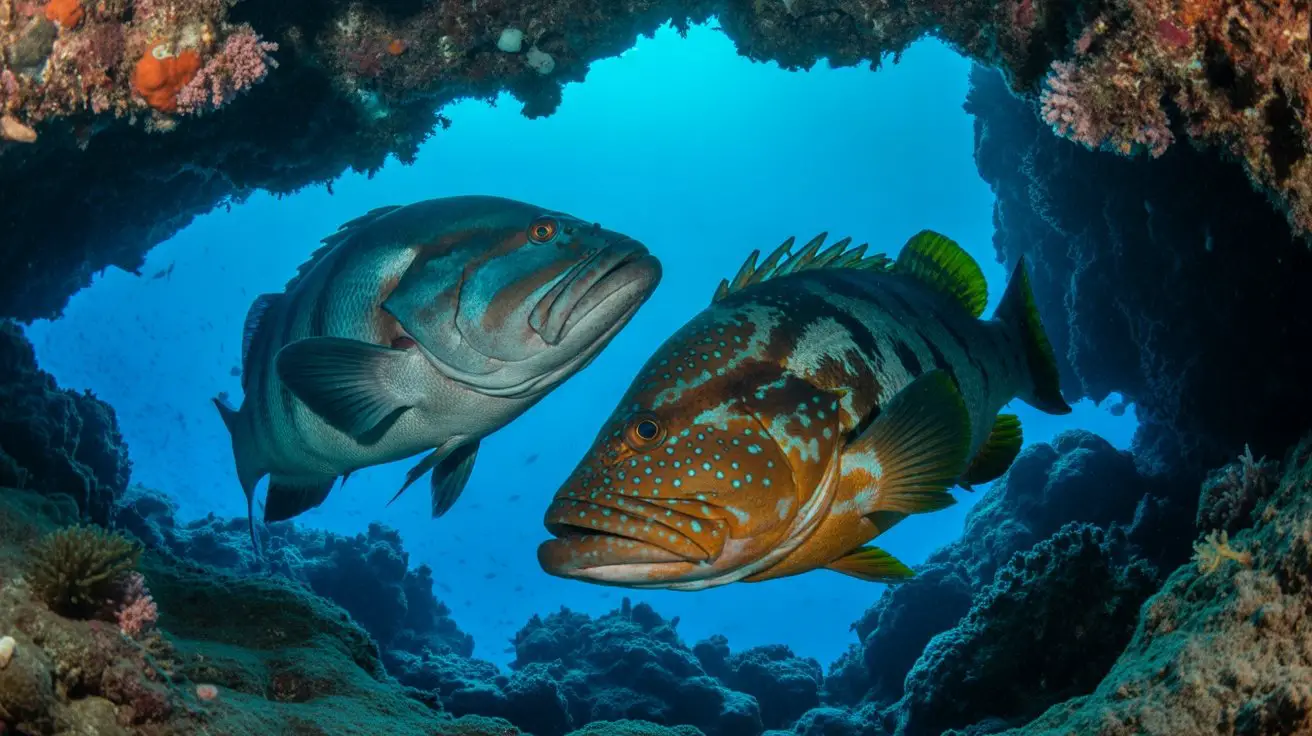
Beyond their formidable hunting prowess, you’ll discover that these reef giants possess sophisticated chromatophore systems enabling rapid physiological color changes within seconds.
You’ll observe three primary chromatophore types: melanophores containing black pigments, erythrophores with red pigments, and iridophores reflecting light through crystalline platelets. Research demonstrates groupers can cycle through fifteen distinct color patterns, each serving specific communicative functions.
You’ll witness aggressive displays featuring darkened vertical bars and enlarged dorsal fins when territories are threatened. Conversely, submissive individuals exhibit pale coloration with horizontal stripes.
During spawning aggregations, you’ll observe dramatic color shifts from dark brown to bright yellow or white, signaling reproductive readiness. Stress responses trigger rapid melanophore expansion, creating mottled patterns that provide camouflage against predators.
Reproduction and Spawning Aggregations
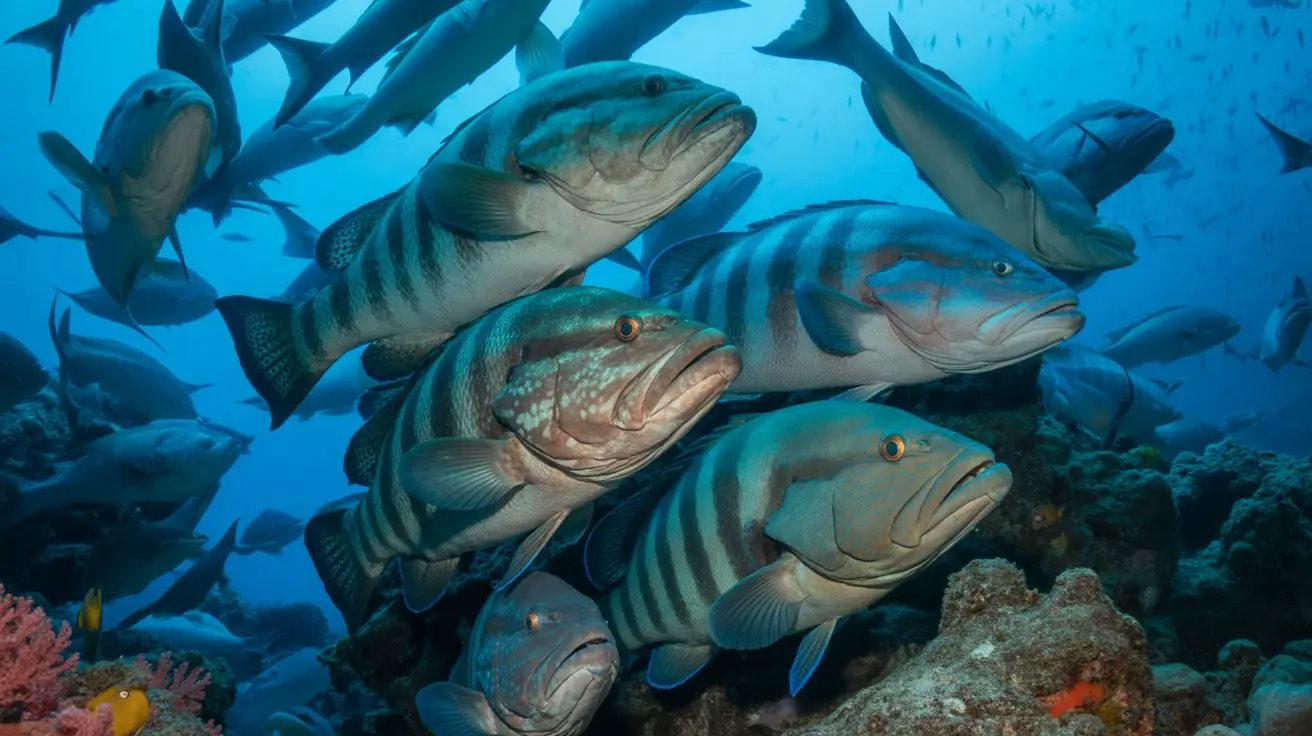
When reproductive cycles align with lunar phases and seasonal temperature shifts, you’ll observe groupers forming massive spawning aggregations that represent one of nature’s most spectacular marine phenomena.
These gatherings occur at specific reef sites, with some aggregations containing over 100,000 individuals.
You’ll find groupers exhibiting protogynous hermaphroditism—starting as females and evolving to males when they reach approximately 15-20 years old.
During spawning events, you’ll witness synchronized gamete release triggered by precise environmental cues. Water temperatures between 26-28°C and new moon phases typically initiate these behaviors.
Nassau groupers travel up to 240 kilometers to reach traditional spawning sites, demonstrating remarkable site fidelity across decades of reproductive cycles.
Conservation Challenges and Threats
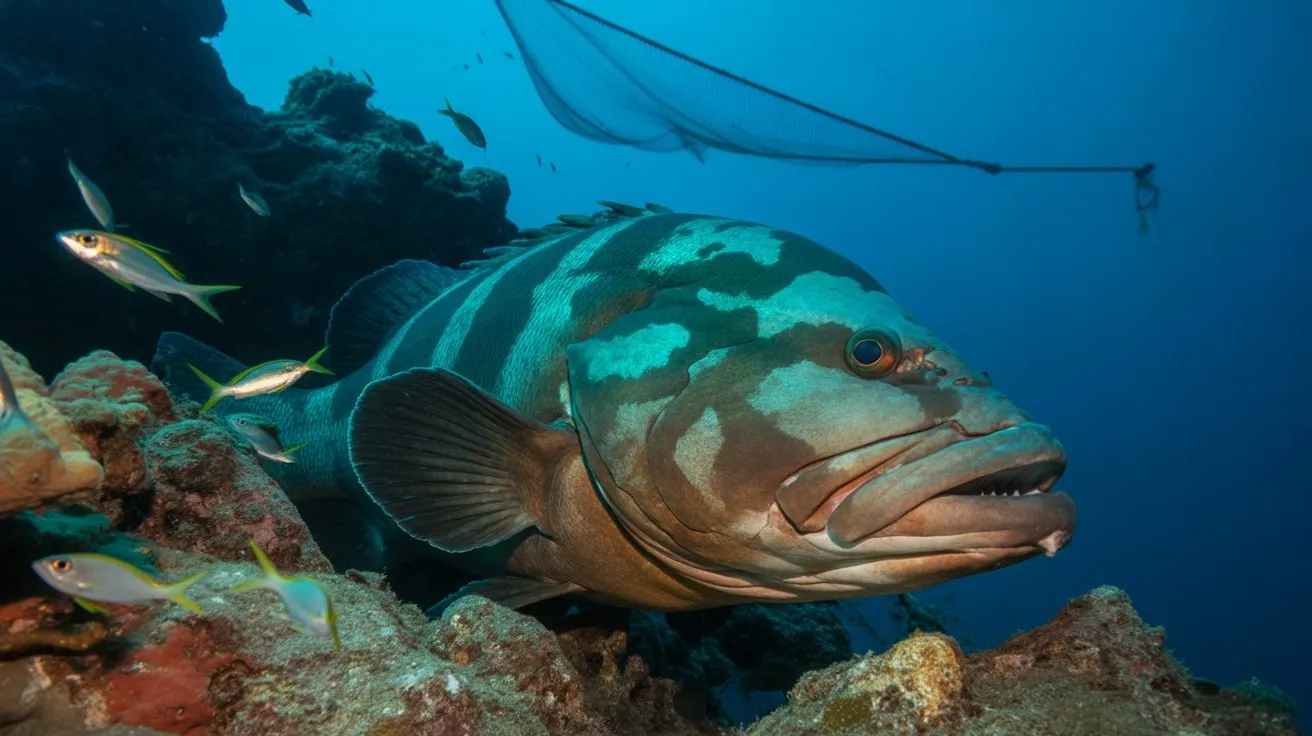
As commercial fishing pressure intensifies across tropical and subtropical waters, you’ll find grouper populations facing unprecedented decline rates of 60-90% in many regions over the past four decades. Their biological characteristics make recovery exceptionally challenging.
Primary conservation threats include:
- Overfishing during spawning aggregations – Concentrated harvesting eliminates entire breeding populations within days.
- Habitat degradation – Coral reef destruction reduces juvenile recruitment areas by 40-50%.
- Live reef fish trade – Asian markets drive targeted capture of premium species like Napoleon wrasse.
- Climate change impacts – Rising temperatures cause coral bleaching, eliminating critical shelter zones.
You’ll observe that groupers’ late sexual maturity and site fidelity compound these pressures. Most species don’t reproduce until 5-15 years old, making population recovery extremely slow when fishing removes breeding adults faster than recruitment can replace them. Additionally, overfishing contributes significantly to the decline of groupers and other marine species, creating an urgent need for sustainable fishing practices.
Conclusion
You’ll witness these apex predators’ decline if current exploitation rates persist—overfishing reduces populations by 80% annually in key habitats. You can’t ignore the data: spawning aggregations have decreased from thousands to mere dozens across Caribbean reefs. You’re observing ecosystem collapse as these keystone species disappear. Their low reproductive rates can’t compensate for intensive harvesting pressure. You must recognize that habitat degradation compounds fishing mortality, creating synergistic effects that’ll devastate remaining populations within decades.