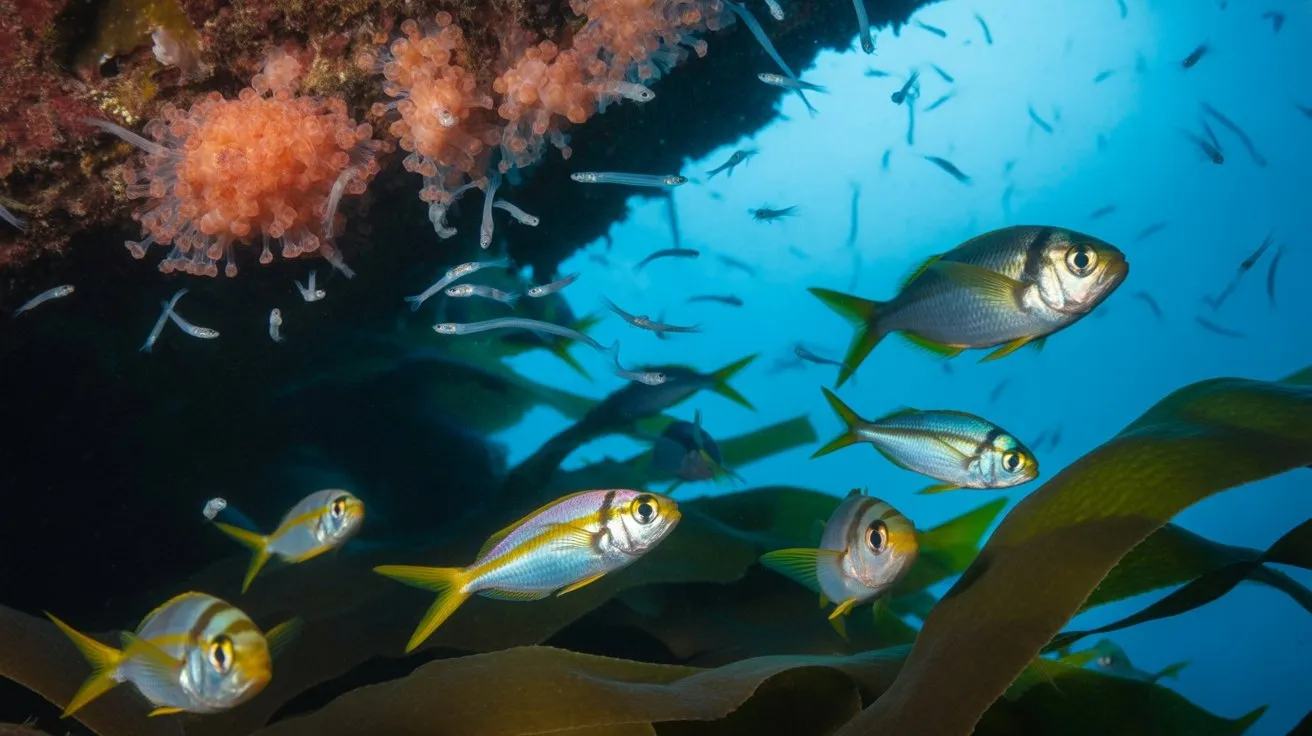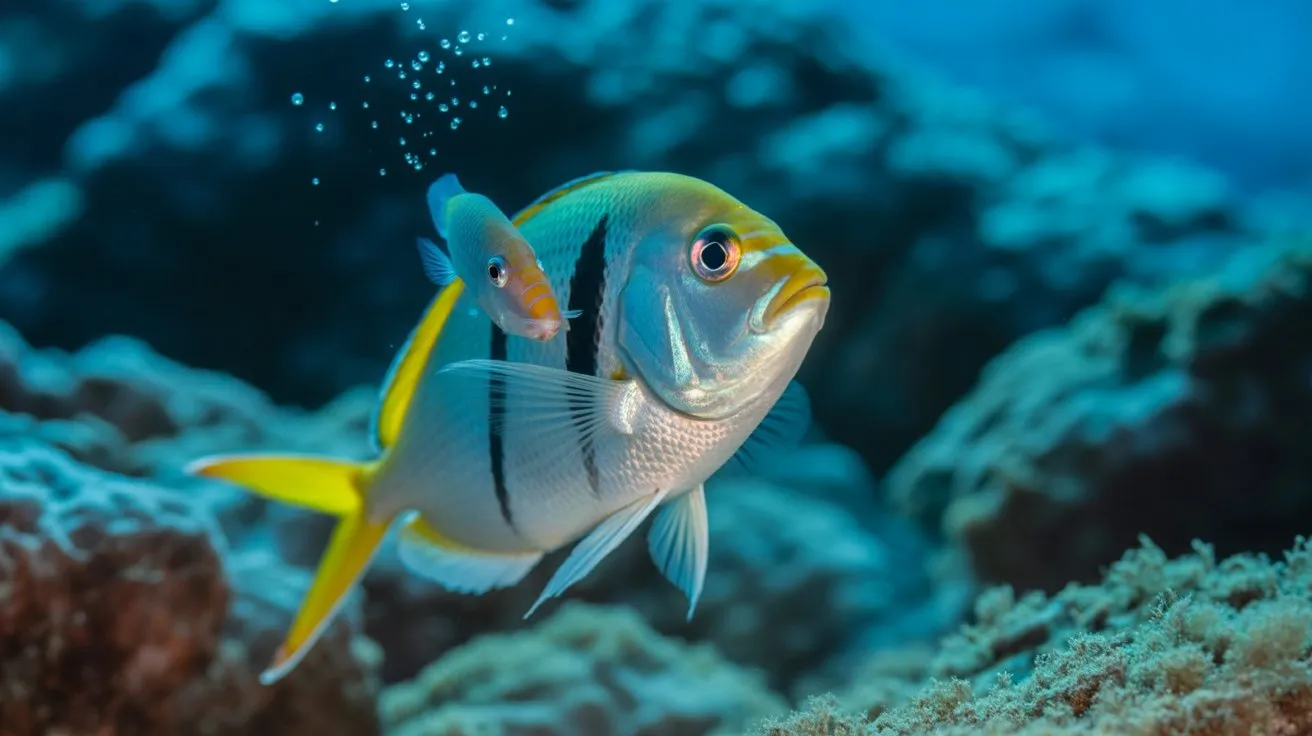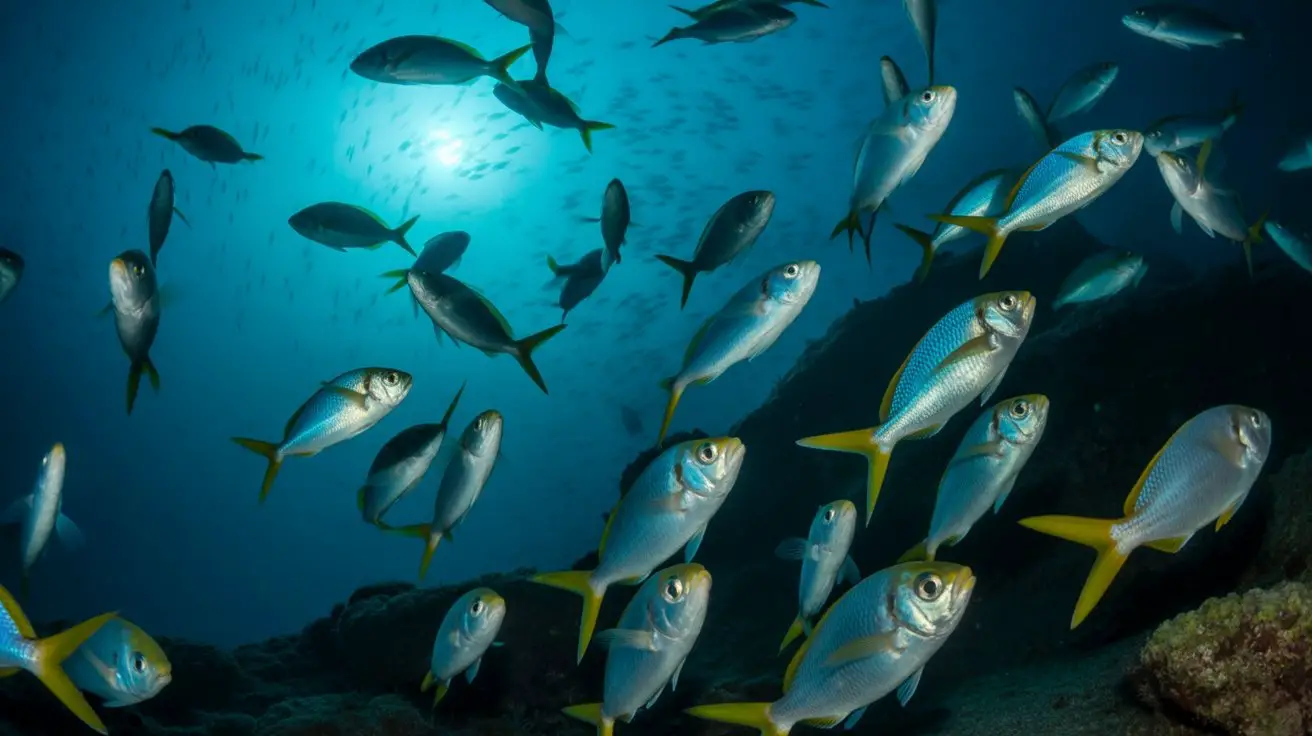
Like a pilot switching to autopilot mid-flight, you’ll find that parrotfish enter a remarkable state called unihemispheric slow-wave sleep, where half their brain remains alert while the other half rests. This neurological adaptation allows oceanic species to maintain predator awareness without sacrificing essential recovery time. Yet this sleep mechanism represents just one piece of a complex survival puzzle that includes electromagnetic field detection, chemical gradient tracking, and acoustic positioning systems that would challenge our most sophisticated technology.
The Challenge of Sleeping Without Solid Ground
Unlike terrestrial animals that rely on stable surfaces for rest, ocean fish face the fundamental challenge of achieving restorative sleep while suspended in a three-dimensional aquatic environment.
You’ll find that fish can’t simply lie down like mammals. Instead, they’ve evolved specialized mechanisms to maintain position during rest periods. Pelagic species often drift with currents while reducing metabolic activity, whereas benthic fish hover near seafloor structures.
You’re observing neurological adaptations where fish enter states of reduced responsiveness without complete consciousness shutdown. Their swim bladders provide buoyancy control, preventing uncontrolled sinking.
Additionally, many species exhibit unihemispheric slow-wave sleep patterns, allowing continued vigilance against predators while achieving necessary neural restoration in constantly flowing water. This ability to adapt to ocean currents helps them optimize their energy use and maintain safety while resting.
Unihemispheric Slow-Wave Sleep in Fish

While mammals typically experience bilateral brain synchronization during sleep, you’ll discover that numerous fish species employ unihemispheric slow-wave sleep (USWS), maintaining neural activity in one brain hemisphere while the other enters restorative phases.
| Fish Species | Active Hemisphere Function | Dormant Hemisphere State | Sleep Duration |
|---|---|---|---|
| Bluehead Wrasse | Predator detection, navigation | Delta wave patterns | 4-6 hours |
| Parrotfish | Environmental monitoring | Reduced metabolic activity | 6-8 hours |
| Blacktip Sharks | Motor control, gill ventilation | Neural restoration | 2-4 hours |
| Dolphinfish | Schooling coordination | Memory consolidation | 3-5 hours |
This neurological adaptation allows continuous respiratory function and threat assessment. You’ll observe that USWS enables fish to process sensory information while achieving necessary neural recovery. The alternating hemispheric activation maintains essential life functions during vulnerable rest periods. Additionally, the diverse adaptations of marine mammals, such as their social behavior, highlight the complexity of life in aquatic ecosystems.
How Fish Stay Alert While Resting
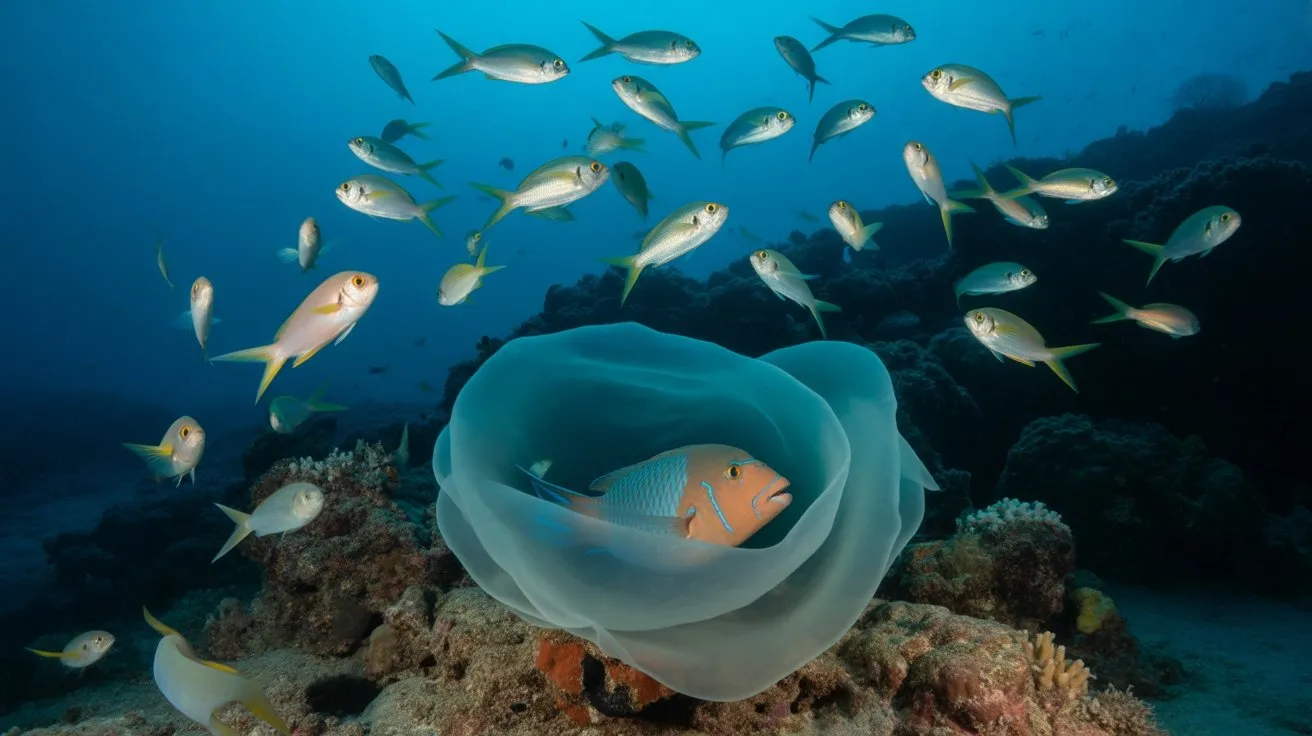
During aquatic rest periods, fish employ sophisticated neurological mechanisms that maintain vigilance against environmental threats.
You’ll observe that while one brain hemisphere enters slow-wave sleep, the contralateral hemisphere maintains heightened sensory processing. This asymmetrical neural activation enables continuous monitoring of water currents, chemical gradients, and acoustic disturbances.
The wakeful hemisphere processes lateral line inputs detecting pressure waves from approaching predators or obstacles. Simultaneously, olfactory receptors remain active, analyzing dissolved compounds for danger signals.
You can’t overlook how the wakeful eye tracks movement patterns while the resting eye shows reduced responsiveness. This neurological division allows essential metabolic recovery without compromising survival instincts.
The alternating hemisphere dominance guarantees both brain regions receive restorative sleep cycles while preserving constant environmental awareness.
Schooling Behavior and Collective Sleep Safety

Fish amplify their resting safety through coordinated schooling formations that distribute vigilance across multiple individuals.
You’ll observe that schools maintain protective geometries during rest periods, with peripheral fish exhibiting heightened alertness while interior members experience deeper sleep states. This collective vigilance system operates through rapid sensory information transfer via lateral line detection and visual cues.
When you examine sleeping schools, you’ll notice rotational patterns where alert individuals periodically shift positions, ensuring continuous surveillance coverage.
Research demonstrates that schooling fish achieve longer unihemispheric slow-wave sleep durations compared to solitary sleepers. The dilution effect reduces individual predation risk, while synchronized escape responses enable rapid school mobilization.
Hydrodynamic positioning during rest optimizes energy conservation through reduced swimming effort.
The Ocean’s Natural GPS System
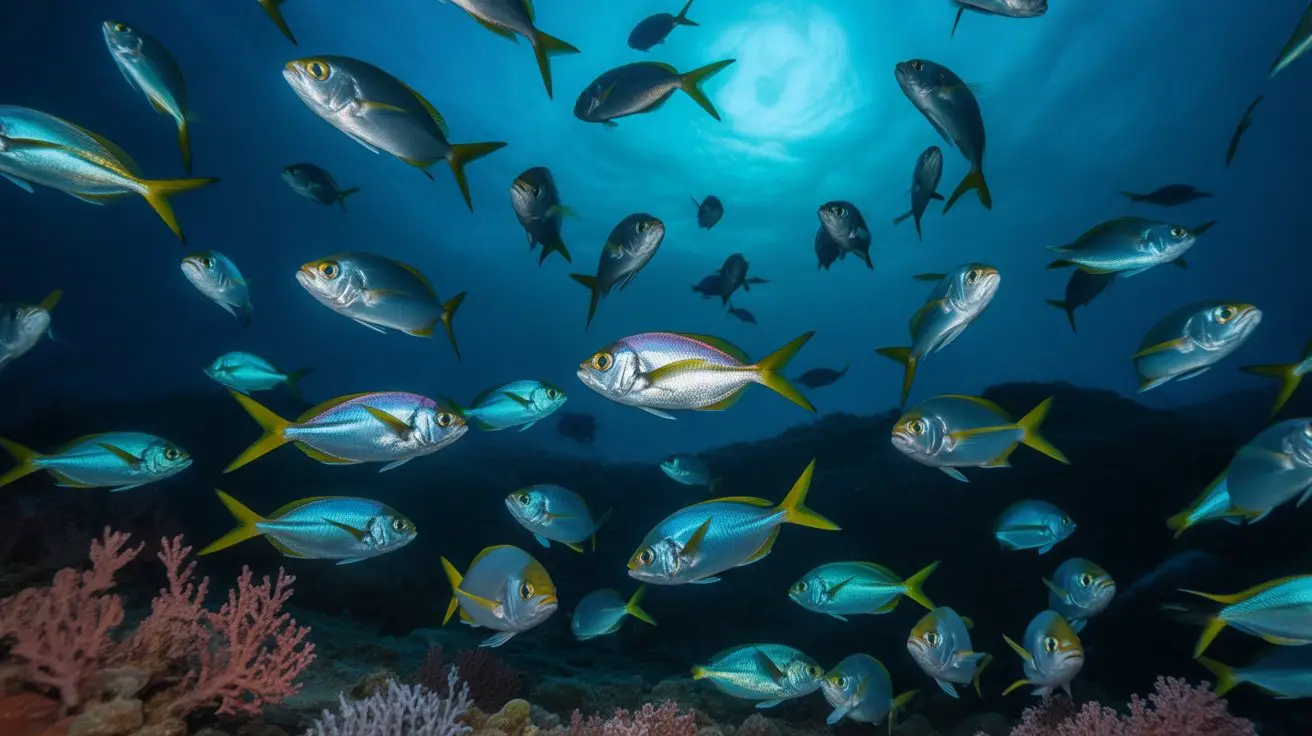
When ocean fish navigate across vast marine territories, they rely on an intricate biological compass system that integrates multiple environmental cues with remarkable precision. You’ll find that pelagic species utilize magnetoreception through specialized cells containing magnetite crystals, enabling detection of Earth’s magnetic field variations.
| Navigation Method | Sensory Mechanism | Effective Range |
|---|---|---|
| Magnetic Field | Magnetite crystals | Global scale |
| Solar Positioning | Polarized light detection | Regional navigation |
| Chemical Gradients | Olfactory receptors | Local homing |
| Acoustic Landmarks | Lateral line system | Coastal areas |
Research demonstrates that migratory fish combine these sensory modalities to create three-dimensional cognitive maps. Your understanding of fish navigation reveals how they process geomagnetic inclination angles, water temperature gradients, and salinity variations simultaneously. This multi-modal approach guarantees accurate positioning during both active swimming periods and rest phases, maintaining directional awareness even during reduced consciousness states. Additionally, ocean currents influence regional temperatures, which can impact fish migratory patterns and behaviors.
Magnetic Field Detection and Navigation
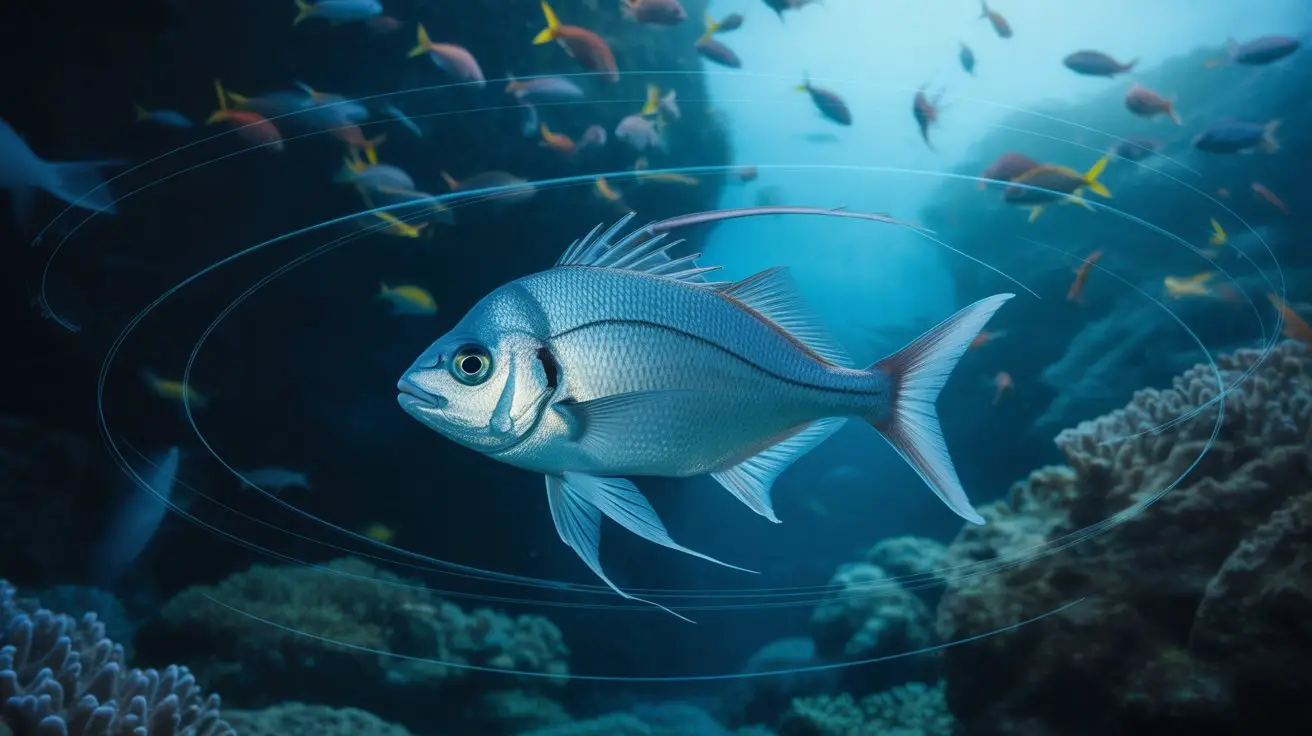
Magnetoreception functions as the primary navigational framework underlying the ocean’s GPS system, with specialized magnetosensitive cells orchestrating precise directional awareness in marine species.
You’ll find these cryptochrome proteins and magnetite nanoparticles concentrated within olfactory epithelium and lateral line systems, detecting Earth’s magnetic field variations with remarkable sensitivity.
Research demonstrates that tuna, salmon, and sharks utilize inclination angles and field intensity gradients to maintain migratory trajectories across thousands of kilometers.
You’re observing quantum entanglement mechanisms within cryptochrome molecules that respond to magnetic field orientations, generating neural signals for directional processing.
These magnetoreceptors function independently of visual cues, enabling navigation during deep-water migrations where light penetration becomes negligible.
Laboratory studies confirm magnetic disruption considerably impairs homing accuracy, validating magnetoreception’s critical role in oceanic navigation systems.
Using Celestial Patterns for Long-Distance Travel

Beyond magnetic field detection, oceanic species demonstrate sophisticated celestial navigation capabilities that integrate solar positioning, stellar patterns, and polarized light cues for transcontinental migrations. You’ll observe that migratory fish species utilize sun compass orientation during daylight hours, adjusting for temporal variations through circadian clock mechanisms. They’re simultaneously processing polarized light patterns that remain consistent despite atmospheric interference.
| Navigation Method | Primary Cue | Accuracy Range | Species Example |
|---|---|---|---|
| Solar Compass | Sun Position | ±5-10 degrees | Atlantic Salmon |
| Polarized Light | Light Vectors | ±3-7 degrees | Bluefin Tuna |
| Stellar Navigation | Constellation Patterns | ±2-5 degrees | European Eel |
| Lunar Cycles | Moon Phases | Variable | Pacific Salmon |
Research demonstrates that these celestial mechanisms function as backup systems when magnetic anomalies occur, providing redundant navigational accuracy essential for successful spawning migrations across oceanic basins.
Chemical Trails and Scent-Based Wayfinding

Ocean fish employ sophisticated olfactory navigation systems that complement their celestial orientation abilities, detecting dissolved chemical signatures across vast marine distances.
You’ll find that salmon demonstrate remarkable precision when following natal stream pheromones during spawning migrations, distinguishing specific waterway compositions from thousands of alternatives. Their olfactory rosettes contain millions of chemoreceptors that process complex molecular gradients with extraordinary sensitivity.
When you examine shark navigation, you’ll discover they track prey biomarkers and territorial scent boundaries across entire ocean basins.
These chemical trails persist for extended periods, creating invisible highways that guide migratory routes. Advanced research reveals that many species simultaneously process multiple olfactory inputs, building thorough chemical maps that enable accurate positioning even when visual and magnetic cues aren’t available.
Sound Navigation in the Deep Sea

While chemical signatures provide essential navigational data in well-lit waters, acoustic echolocation becomes the primary wayfinding mechanism when you’re examining deep-sea environments where light penetration ceases entirely.
You’ll find that bathypelagic species utilize biosonar systems, emitting high-frequency clicks through specialized sound-producing organs called sonic muscles. These acoustic pulses reflect off seafloor topography, thermal layers, and biological targets, creating detailed three-dimensional maps of surrounding terrain.
When you analyze echolocation frequencies, you’ll notice species-specific adaptations: larger predators employ lower frequencies for long-range detection, while smaller fish use higher frequencies for precise object discrimination.
Sound waves travel efficiently through water’s dense medium, enabling navigation across vast oceanic distances. This acoustic mapping system proves particularly vital during vertical migrations, allowing precise depth positioning within specific thermoclines and oxygen minimum zones. Additionally, the presence of top predators influences the behavior and distribution of prey species, further enhancing navigational dynamics in the deep sea.
Seasonal Migration Patterns and Route Memory

As seasonal temperature gradients shift oceanic currents and nutrient distributions, you’ll observe that pelagic fish species execute precisely timed migrations spanning thousands of kilometers with remarkable navigational accuracy.
You’ll find that bluefin tuna demonstrate extraordinary route fidelity, returning to specific spawning grounds through multi-generational genetic programming and learned behavioral patterns. Their hippocampus-equivalent brain regions store detailed bathymetric maps, integrating magnetic field signatures with olfactory chemical gradients.
You’ll notice Atlantic salmon utilize natal stream imprinting, encoding unique pheromone signatures during juvenile development for adult homing behavior. Research indicates these fish maintain circannual biological clocks synchronized with photoperiod changes, triggering hormonal cascades that initiate migration timing.
GPS telemetry studies reveal sub-meter precision in route replication across consecutive migration cycles. Furthermore, the impact of ecotourism can enhance awareness of these migratory patterns, fostering greater appreciation for marine conservation efforts.
Conclusion
You’d think life underwater would be simpler—no need for alarm clocks or GPS devices. Yet ocean fish have evolved remarkably complex neurophysiological mechanisms that’d make your smartphone jealous. While you’re struggling to find your way home from the grocery store, these organisms effortlessly execute transoceanic migrations using magnetoreception, chemotaxis, and astronomical positioning. Their unihemispheric slow-wave sleep patterns demonstrate sophisticated neural adaptations that you can’t achieve, even with modern technology’s assistance.